



Get started learning to build your own electronics by following our FREE online courses below!
Learn More »
Categories
- animatronics (12)
- apple (11)
- arduino (179)
- art (41)
- articles (121)
- artificial intelligence (11)
- automation (421)
- avr (205)
- bitcoin (3)
- breadboard (9)
- cameras (57)
- cars (26)
- cell phones (28)
- clothing mods (21)
- console mods (26)
- dangerous (94)
- desktop mods (24)
- embedded (5)
- flying things (54)
- fpga (22)
- gaming creations (108)
- interface (225)
- internet (17)
- laptop mods (6)
- lasers (22)
- linux (7)
- magnetic (3)
- medical (12)
- microcontrollers (51)
- misc projects (152)
- msp (12)
- music (124)
- pic (90)
- projects (23)
- pyroedu (76)
- raspberry pi (26)
- robots (312)
- security (36)
- sensors (307)
- software (200)
- solar (19)
- stamp (9)
- tools (149)
- tutorials (98)
- Uncategorized (45)
- usb (44)
- wireless (256)
Sponsors
Build Like A Pyro!
Find many of the parts used on this site at our favorite online electronics shop


4-Input Mini Logic Analyzer
Posted September 14, 2012 by Chris
“This mini Logic analyzer is a tool for you to watch on LCD the logic transitions 0 or 1 of a digital data signal. A digital data signal can be found on the output pin of TSOP-1730 Infrared Receiver, on the Transmit and reveive pins of MAX-232 chip (RS-232), on Clock and Data pins of I2C data bus and many more electronic components. This circuit supports capturing for up to 100 kHz digital signals.”

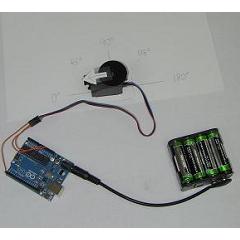
Arduino Servo Motor Controller
Posted September 13, 2012 by Chris
“We have already explored how to control a servo motor using a PIC microcontroller, but this time let’s take a look at how to control a servo motor using the Arduino platform. We’re not trying to do anything extra-ordinary in this article, just trying to make the servo motor move to the specific angle that we want it to be at and stay there.”

Measuring Projectile Velocity
Posted September 12, 2012 by Chris
“So being the EE that I am, this got me to thinking: wouldn’t this be even more fun if we could measure muzzle velocity? It shouldn’t be all that hard; we could just hook up a couple LEDs and photo-detectors, fire through the beams, time it with a microcontroller, and voila! So, that’s precisely what I did, except that I decided to go with a couple cheap laser diodes instead of LEDs.”
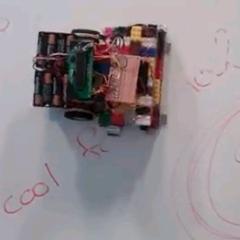
Magnetic Lego Whiteboard Eraser Robot
Posted September 11, 2012 by Chris
“Despite the fact that it is a really simple and cheap design, I really love this creation of a magnetic whiteboard eraser bot that’s built with Lego parts and a simple Atmel microcontroller, which acts as brain controller. Le Zhang and Michael Lathrop, both senior students at Cornell had this nice idea how to efficiently clean your professor’s whiteboard.”

Creating A Physical Version of the DIY Calculator
Posted September 10, 2012 by Chris
“Although the virtual DIY Calculator is lots of fun, there is something satisfying about having a real machine to play with, so we’ve been pondering the idea of creating a physical version of the DIY Calculator…”

Measuring Battery Capacity With An Arduino
Posted September 9, 2012 by Chris
“My idea was really simple: I would make a circuit that would fully discharge each of the batteries while measuring how much energy it produced…I had an Arduino and an LCD panel left over from a different project so I thought I’d make a standalone unit.”

Explorations In Conductive Ink
Posted September 8, 2012 by Chris
“I’ve recently had success in making a conductive ink using a fine copper powder suspended in an acrylic airbrush medium. This paper on conductive epoxies was really the key to getting this ink working….There is still quite a bit of experimentation to be done, but this is a very encouraging result!”

SPI Interface Big 7-Seg LED
Posted September 7, 2012 by Chris
“Easy build and use, the general purpose Big LED with SPI serial interfacing. Expandable for multiple digits but still uses only three wires for receiving data from any uC boards.”
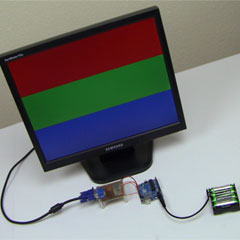
An Arduino Outputting VGA Signals
Posted September 6, 2012 by Chris
“In the past I have built many, many VGA based projects,, but never with Arduino and so, in this article, we will use the Arduino UNO platform to simulate VGA signals using straight C code. This doesn’t even come close to how video card designers do it, but it’s a fun exercise in seeing how well we understand the timing of the Arduino and AVR microcontroller as well as the VGA protocol.”

Oh_Oh Experiments With Robots
Posted September 5, 2012 by Chris
“Robots are becoming a common educational resource. Together with other applied science fields like wearable computing, or music instrument design, robotics provides an alternative door into traditional fields like math and physics, as well as into more contemporary ones like computer science and complex systems.”
Currently Hot

PIC Priority Interrupts
learn how to give your interrupts priority

An Intro To Interrupts On A PIC
an easy guide for learning about interrupts

PIC As SPI Master And Slave
learn how to use spi on a pic

Animatronic Neck [DIY]
build a neck for an animatronic head

Homemade Animatronic Mouth
learn how to make your robot speak
Animatronics

Recent Articles

Arduino DDS Shield
build your own arduino based analog signal generator

A Digital Multimeter In Review (Tenma 72-7735)
learn about your typical digital multimeter in review

The PIC Annoy PCB
build something to annoy your co-workers

Automate Your Life With Cron
learn how to use cron for computer automation

Web Scraping For Weather Updates
learn how to use php to scrape the web

Creating A Web Server In Linux
learn how to make a lamp web server in linux

Stepper Motor Control With A stepRocker TMCM-1110
learn how a commercial stepper motor controller works

Arduino To PIC Wireless Proximity Motor Control
control a motor with a distance sensor wirelessly

PIC to Arduino Wireless Communication via XBee
use xbee to make a pic wirelessly talk to an arduino

Motor Control via Infrared Distance Sensor
control a motor simply by waving your hand

