



Get started learning to build your own electronics by following our FREE online courses below!
Learn More »
Categories
- animatronics (12)
- apple (11)
- arduino (179)
- art (41)
- articles (121)
- artificial intelligence (11)
- automation (421)
- avr (205)
- bitcoin (3)
- breadboard (9)
- cameras (57)
- cars (26)
- cell phones (28)
- clothing mods (21)
- console mods (26)
- dangerous (94)
- desktop mods (24)
- embedded (5)
- flying things (54)
- fpga (22)
- gaming creations (108)
- interface (225)
- internet (17)
- laptop mods (6)
- lasers (22)
- linux (7)
- magnetic (3)
- medical (12)
- microcontrollers (51)
- misc projects (152)
- msp (12)
- music (124)
- pic (90)
- projects (23)
- pyroedu (76)
- raspberry pi (26)
- robots (312)
- security (36)
- sensors (307)
- software (200)
- solar (19)
- stamp (9)
- tools (149)
- tutorials (98)
- Uncategorized (45)
- usb (44)
- wireless (256)
Sponsors
Build Like A Pyro!
Find many of the parts used on this site at our favorite online electronics shop


3D Music Visualization with Spinning Display
Posted May 8, 2018 by Chris
"As a device that is primarily for entertainment purposes, we want the final design to be simple to control, portable, easy to use and cool. Thus, we decided to generate 3D visual effects by spinning an LED screen around its middle vertical axis. The screen is 10×10 and is a mix of red and yellow LEDs."
FPGA Audio Peak Level and Correlation Meter
Posted March 11, 2018 by Chris
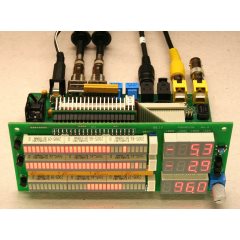
"I started this project more to gather some experience with FPGAs, rather than to design or own such a device, but it ultimately developed into a complete design, consisting of several boards."
OSC and MIDI Foot Controllers
Posted March 8, 2018 by Chris
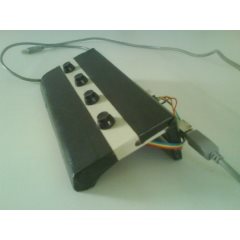
"The goal of this project is to provide open hardware design of OSC (Open Sound Control) and MIDI foot controllers, primarily targeted for use with SooperLooper, distributed under the GNU General Public License."
How to Build the CMoy Pocket Amplifier
Posted August 19, 2017 by Chris
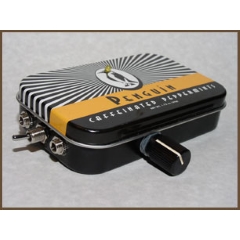
"I think that the CMoy pocket amplifier is an ideal project to get started in audio DIY. This article is written for the beginner DIYer, though if you just want a guide to building this particular amp, you can skip to the parts or assembly sections.quot;
Developing an IR Remote and Software Controller
Posted May 11, 2016 by Chris
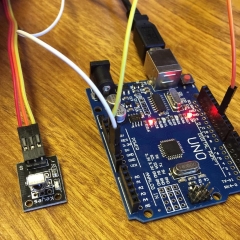
"This one is an interesting one, it’s something we’ve been looking at for a while and figuring out how to solve it. We have sets of speakers and projectors and the users keep losing the remotes, or misplaced/stolen. Usually this wouldn’t be a problem, we’ll just contact the supplier or manufacturer and order replacements. Except we can’t any more."
1WAMP Open Hardware Guitar Amplifier
Posted April 12, 2016 by Chris
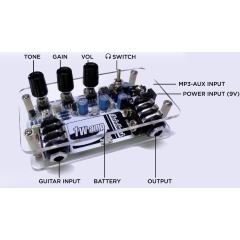
"1Wamp is a one Watt small guitar amplifier based on a JFET guitar pre-amp, the Big Muff Pi tone control and the LM386 power amplifier. This portable amp is an open hardware project designed by ElectroSmash using only free and open-source tools."
Happy Days or Staging Beckett with 11 motors
Posted March 7, 2016 by Chris
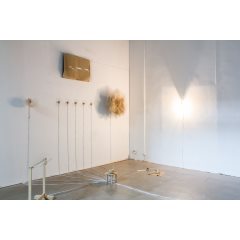
"Happy Days is exploring narrative in the form of an installation. It is staged without human actors or conventional (verbal) dialogue in a non-theatrical space. We chose to stage Samuel Beckett’s Happy Days since, as performing a ritual in the play, overshadows the performer, the object of the ritual can survive on its own."
Polyphonic FM Synthesizer with STM32F031
Posted February 17, 2016 by Chris
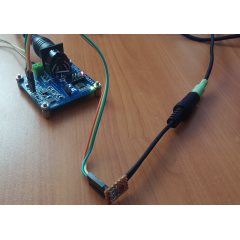
"I’ve built a playable, MIDI capable, polyphonic FM synthesizer using an 32bit ARM Cortex M0 microcontroller and an audio codec. This was a learning experience for me. You can find the finished form of the system in following two images."
Capacitive Touch Piano
Posted February 15, 2016 by Chris
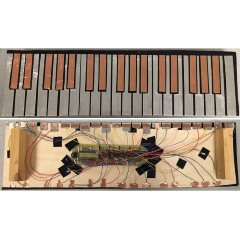
"Our project designs a touch piano with 3 octaves (37 keys) by connecting a handmade piano-like touch-sensitive keyboard with a PIC32 microcontroller. The sound is generated by using Karplus-Strong algorithm with debounce function and with a sensitive reaction time of several hundred microseconds."
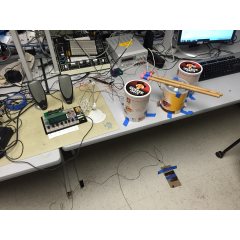
Digitally Recordable User Modifiable Sound Emitting Tool
Posted November 19, 2015 by Chris
"A modular electronic drum kit that allows recorded samples to be used as drum sounds. We decided to build a modular electronic drum kit because we thought it would be an interesting project to be able to record ourselves and use our own voices or sounds as drum noises."
Currently Hot

Altera’s UP2 Board
learn about the up2 & create a 4-bit full adder

Build A CPLD Dev Board
make your own cpld development board

Build A ByteBlaster
build a cable so you can program your fpga/cpld

Interfacing A PIC To LCD (16×2)
control an lcd display with a pic

Short Range Personal Radar
a complete radar system using the ir range sensor
Animatronics

Recent Articles

Arduino DDS Shield
build your own arduino based analog signal generator

A Digital Multimeter In Review (Tenma 72-7735)
learn about your typical digital multimeter in review

The PIC Annoy PCB
build something to annoy your co-workers

Automate Your Life With Cron
learn how to use cron for computer automation

Web Scraping For Weather Updates
learn how to use php to scrape the web

Creating A Web Server In Linux
learn how to make a lamp web server in linux

Stepper Motor Control With A stepRocker TMCM-1110
learn how a commercial stepper motor controller works

Arduino To PIC Wireless Proximity Motor Control
control a motor with a distance sensor wirelessly

PIC to Arduino Wireless Communication via XBee
use xbee to make a pic wirelessly talk to an arduino

Motor Control via Infrared Distance Sensor
control a motor simply by waving your hand

