



Get started learning to build your own electronics by following our FREE online courses below!
Learn More »
Categories
- animatronics (12)
- apple (11)
- arduino (179)
- art (41)
- articles (121)
- artificial intelligence (11)
- automation (421)
- avr (205)
- bitcoin (3)
- breadboard (9)
- cameras (57)
- cars (26)
- cell phones (28)
- clothing mods (21)
- console mods (26)
- dangerous (94)
- desktop mods (24)
- embedded (5)
- flying things (54)
- fpga (22)
- gaming creations (108)
- interface (225)
- internet (17)
- laptop mods (6)
- lasers (22)
- linux (7)
- magnetic (3)
- medical (12)
- microcontrollers (51)
- misc projects (152)
- msp (12)
- music (124)
- pic (90)
- projects (23)
- pyroedu (76)
- raspberry pi (26)
- robots (312)
- security (36)
- sensors (307)
- software (200)
- solar (19)
- stamp (9)
- tools (149)
- tutorials (98)
- Uncategorized (45)
- usb (44)
- wireless (256)
Sponsors
Build Like A Pyro!
Find many of the parts used on this site at our favorite online electronics shop


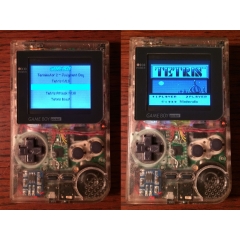
Raspberry Pi Gameboy Pocket
Posted January 21, 2020 by Chris
“The Pi-Pocket is a mini portable games console capable of playing Gameboy, NES, Sega Master System, Game Gear games along with other popular Linux ported titles such as Doom and Duke Nukem using the popular Raspberry Pi emulator front-end known as RetroPie.”
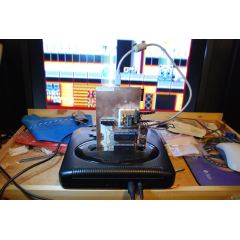
D.I.Y. Sega Genesis Cartridge UMDKv2 (FPGA)
Posted May 2, 2018 by Chris
"The UMDKv2 is basically a PROM emulator. It’s a small FPGA board connected to a USB MegaDrive Kit. UMDKv1 (link) Is also worth a look, it uses an AVR microcontroller as a PROM emulator."
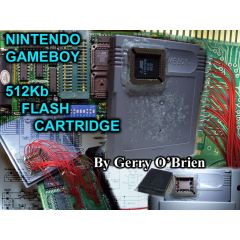
D.I.Y. 512Kb NINTENDO Game Boy Flash Cartridge
Posted April 6, 2018 by Chris
"Hopefully the information I have posted here will help you all succeed in building your very own Nintendo Gameboy Flash Cartridges. Soon enough you’ll be up and testing your own custom code or custom games on the real hardware."
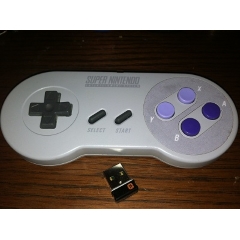
Wireless SNES Controller
Posted August 25, 2017 by Chris
"The goal of this project was to build a wireless SNES controller that has the feel and action of the original hardware while also upgrading the interface from the SNES connector to a more modern USB connection."
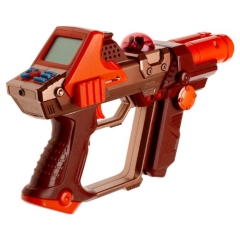
Starting A Build of an Arduino Laser Tag System
Posted July 17, 2017 by Chris
"For the past few months, my friends and I have been planning to make our own laser tag system that we can play at home. The goal is to make a laser tag system that we can modify and program different game modes. Why are we doing his? We just want to play some laser tag, and learn a couple of things along the way."
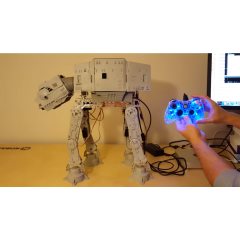
The AT-AT Project – Building A Walker
Posted March 21, 2016 by Chris
"Combine an Arduino Uno, an Adafruit Servo Shield, Xbox 360 Controller, and a beat-up 1981 Kenner At-At Walker and the result is the toy I always wanted when I was a kid. If you played with this toy growing up you will probably remember how clumsy it was and difficult to move around."
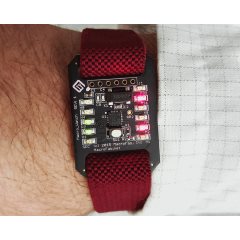
Designing and Building the Macro Watch
Posted February 3, 2016 by Chris
"Three weeks before the Houston Maker Faire Chris came to me asking if we could whip up a low cost giveaway for the faire. I wanted to giveaway something more than a blinky LED badge since that is the typical electronic swag at Maker Faire. It had to be something that the person would wear and would want to show off to other Makers to spread the word about MacroFab. Blinking LEDs are always necessary though."
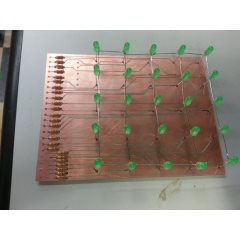
5×5 LED Display Snake Game (mbed micro)
Posted November 15, 2015 by Chris
"This 5×5 LED Display Snake Game is the first stepping stone to a fully functional 3-D snake game on a 5x5x5 LED Cube which will be built in a future project. This introductory project serves to provide experience for soldering the LEDs and creating a framework for the more involved LED cube."
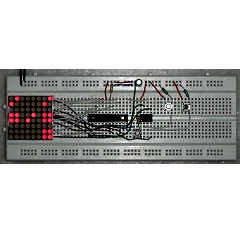
Digital Tic-Tac-Toe Using ATtiny85
Posted October 30, 2015 by Chris
"This project is an attempt to recreate the classic game in a digital format. To spice things up a bit, instead of using the regular 2 player setup it uses an inbuilt AI mechanism to compete against the player."
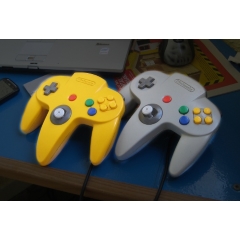
Nintendo 64 controller on AVR
Posted October 1, 2015 by Chris
"I went on my regular trip to the dumpster the other day, and found no less than two Nintendo 64 controllers. It’s time to connect them to a microcontroller!"
Currently Hot

DIY FPGA Programmer (For Altera Devices)
build the updated byteblastermv to program altera fpga devices

RGB LED Control via PIC
learn how to display every color on an rgb led

EECE 343 Final FPGA Projects
some example FPGA design using the up2 board

Xbee Wireless Servo Control
control servo motors wirelessly with xbee wifi modules

DE0 Nano Intro Tutorial
learn the basics needed to use the de0 nano
Animatronics

Recent Articles

Arduino DDS Shield
build your own arduino based analog signal generator

A Digital Multimeter In Review (Tenma 72-7735)
learn about your typical digital multimeter in review

The PIC Annoy PCB
build something to annoy your co-workers

Automate Your Life With Cron
learn how to use cron for computer automation

Web Scraping For Weather Updates
learn how to use php to scrape the web

Creating A Web Server In Linux
learn how to make a lamp web server in linux

Stepper Motor Control With A stepRocker TMCM-1110
learn how a commercial stepper motor controller works

Arduino To PIC Wireless Proximity Motor Control
control a motor with a distance sensor wirelessly

PIC to Arduino Wireless Communication via XBee
use xbee to make a pic wirelessly talk to an arduino

Motor Control via Infrared Distance Sensor
control a motor simply by waving your hand

