



Get started learning to build your own electronics by following our FREE online courses below!
Learn More »
Categories
- animatronics (12)
- apple (11)
- arduino (179)
- art (41)
- articles (121)
- artificial intelligence (11)
- automation (421)
- avr (205)
- bitcoin (3)
- breadboard (9)
- cameras (57)
- cars (26)
- cell phones (28)
- clothing mods (21)
- console mods (26)
- dangerous (94)
- desktop mods (24)
- embedded (5)
- flying things (54)
- fpga (22)
- gaming creations (108)
- interface (225)
- internet (17)
- laptop mods (6)
- lasers (22)
- linux (7)
- magnetic (3)
- medical (12)
- microcontrollers (51)
- misc projects (152)
- msp (12)
- music (124)
- pic (90)
- projects (23)
- pyroedu (76)
- raspberry pi (26)
- robots (312)
- security (36)
- sensors (307)
- software (200)
- solar (19)
- stamp (9)
- tools (149)
- tutorials (98)
- Uncategorized (45)
- usb (44)
- wireless (256)
Sponsors
Build Like A Pyro!
Find many of the parts used on this site at our favorite online electronics shop


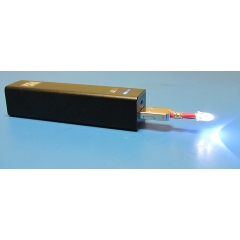
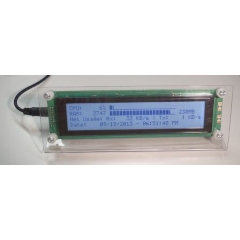
A PIC18F2550 Based Computer Status Monitor
Posted July 25, 2015 by Chris
"This project is a USB based computer status display. Downloads at the bottom of the page…The firmware uses microchips USB stack. The files included in the USB folder are from the ‘Microchip Libraries of Applications’ I used version v2012-08-22 of this…The support application was written in C#. Some things of note…the file HIDInterface.cs is an invisible form."
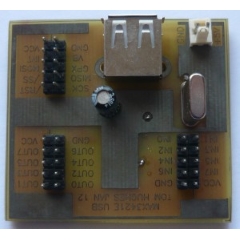
USB Host Interface Board
Posted May 27, 2015 by Chris
"The device runs in both host and peripheral USB modes however in this design only the host connection has been used since i already had a peripheral interface breakout board already and therefore didn’t need this capability."
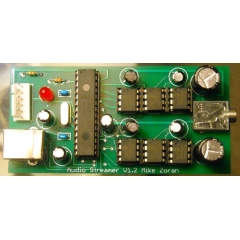
A Microchip PIC Based USB Sound Card
Posted May 26, 2015 by Chris
"The sound card runs at a sample rate of 48KHz, 32KHz or 24KHz selectable by the OS with 12 bits per sample. The quality approaches commercial grade as the sample rate is higher then CDs. 44.1KHz was not implemented due to the difficultly and additional processing overhead."
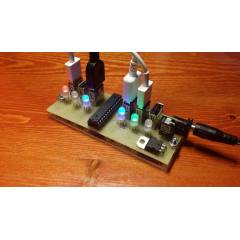
Simple 6X USB Charger with Current Monitor
Posted March 5, 2015 by Chris
"This is a simple 6 port USB device charger with a individual current monitor on each port. The charging current is indicated using RGB LEDs. Blue means slow charge, green means 250mA to 750mA, red means over 750mA, and purple means over 1500mA. This circuit involves an ATmega328P, INA169, and a OKR-T10-W12."
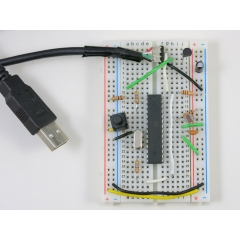
HID-class USB Serial Communication for AVRs using V-USB
Posted February 15, 2015 by Chris
"As you probably know, V-USB is a very useful software-only implementation of low-speed USB device for AVR microcontrollers. It adds USB functionality for almost any AVR, particularly for those without hardware USB functionality. With this, it’s possible to make a very low-cost standalone Arduino with USB port and without having to use an FTDI chip."
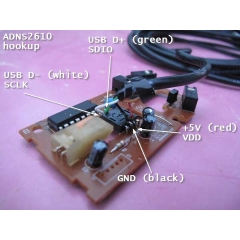
Visualising Optical Mouse Sensor Data Using Arduino And Processing
Posted January 29, 2015 by Chris
"If you open a common optical mouse you will most likely find two chips inside — one being a general purpose micro-controller and the other an optical mouse senor. The sensor captures images of the surface below the mouse at high frame rate. It uses captured images to calculate the displacement the mouse is moved over time. Incidentally, it is also able to provide the raw image data. "
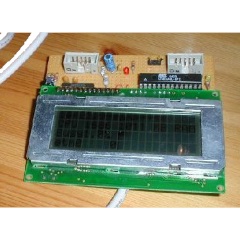
HD44780 LCD To USB
Posted December 5, 2014 by Chris
"LCD2USB is a open source/open hardware project. The goal of LCD2USB is to connect HD44780 based text LCD displays to various PCs via USB. LCD2USB was meant to be cheap and to be made of easily available parts. It is therefore based on the Atmel AVR Mega8 CPU and does not require any difficult to obtain parts like separate USB controllers and the like."

Meet Robin: The CAPS-LOCK indicating robotic helper
Posted September 18, 2014 by Chris
"Are you struggling to see if your caps-lock is enabled? Typing in incorrect passwords, because of this? Robin can be of assistance. He will also warn you if you are toggling caps-lock to quickly."
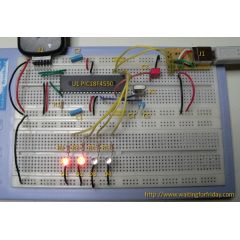
Open Source Framework for USB Generic HID devices using PIC18F
Posted September 11, 2014 by Chris
"I’ve developed a framework for producing USB devices which covers both the Windows host-side application development and the PIC18F firmware itself. The framework consists of a Visual Studio C# class library, a windows reference application, a simple USB hardware reference design and a PIC18F4550 firmware which communicates with the class library."
Currently Hot

Homemade Animatronic Mouth
learn how to make your robot speak

[DIY] Animatronic Eyes
building animatronic eyes for an animatronic face

DIY Animatronic Eyebrows
give your robot some emotion with animatronic eyebrows

Wireless Communication Over IR
ascii serial communication over infrared light streams

Dual Motor Control – SN754410
quick and cheap dual motor control of speed and direction
Animatronics

Recent Articles

Arduino DDS Shield
build your own arduino based analog signal generator

A Digital Multimeter In Review (Tenma 72-7735)
learn about your typical digital multimeter in review

The PIC Annoy PCB
build something to annoy your co-workers

Automate Your Life With Cron
learn how to use cron for computer automation

Web Scraping For Weather Updates
learn how to use php to scrape the web

Creating A Web Server In Linux
learn how to make a lamp web server in linux

Stepper Motor Control With A stepRocker TMCM-1110
learn how a commercial stepper motor controller works

Arduino To PIC Wireless Proximity Motor Control
control a motor with a distance sensor wirelessly

PIC to Arduino Wireless Communication via XBee
use xbee to make a pic wirelessly talk to an arduino

Motor Control via Infrared Distance Sensor
control a motor simply by waving your hand

