



Get started learning to build your own electronics by following our FREE online courses below!
Learn More »
Categories
- animatronics (12)
- apple (11)
- arduino (179)
- art (41)
- articles (121)
- artificial intelligence (11)
- automation (421)
- avr (205)
- bitcoin (3)
- breadboard (9)
- cameras (57)
- cars (26)
- cell phones (28)
- clothing mods (21)
- console mods (26)
- dangerous (94)
- desktop mods (24)
- embedded (5)
- flying things (54)
- fpga (22)
- gaming creations (108)
- interface (225)
- internet (17)
- laptop mods (6)
- lasers (22)
- linux (7)
- magnetic (3)
- medical (12)
- microcontrollers (51)
- misc projects (152)
- msp (12)
- music (124)
- pic (90)
- projects (23)
- pyroedu (76)
- raspberry pi (26)
- robots (312)
- security (36)
- sensors (307)
- software (200)
- solar (19)
- stamp (9)
- tools (149)
- tutorials (98)
- Uncategorized (45)
- usb (44)
- wireless (256)
Sponsors
Build Like A Pyro!
Find many of the parts used on this site at our favorite online electronics shop


Freedom Robot – Maze Solver
Posted April 17, 2013 by Chris
“Finally I have found some time over the past week-end to enhance my Zumo robot. After I had my line following robot based on the Pololu Zumo chassis and the FRDM-KL25Z, I thought it should be easy and logical to solve a maze. Logical: yes. Easy: not that much. In fact it took me longer than expected. As always, there are a lot of tiny and important problems to solve.”
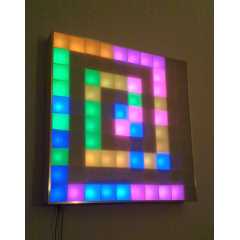
TwitterMatrix: Tweets as a Color Source
Posted April 16, 2013 by Chris
“I found a nice article on using the twitter search API in python and used it as a base for my script. Here’s what it does: first, it searches for the string ‘my favorite color’ and in practice finds around .1-5 tweets a minute…the script simply cleans up the tweet, removes any strange character like ‘#’ and compares every word of the tweet with my lookup table. The first color string in the tweet wins.”

Keyglove – A Keyboard Glove
Posted April 15, 2013 by Chris
“The Keyglove is an innovative new way to interact with your technology. A wearable, wireless, open-source input device, the Keyglove provides unprecedented flexibility and convenience for gaming, design, art, music, data entry, device control, 3D object manipulation, and even inexpensive telepresence.”
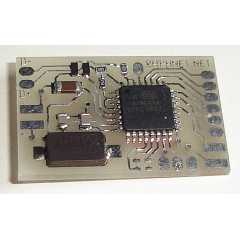
Multiuse Tiny1 AVR PCB
Posted April 14, 2013 by Chris
“This small PCB, which I named Multiuse tiny1 was originally designed to convert NES/SNES controllers to USB. Since there is not a lot of space availabe inside an SNES controller, I designed the PCB to be as small as necessary. The PCB has improved since the beginning, thanks to the many other uses I found for this PCB.”
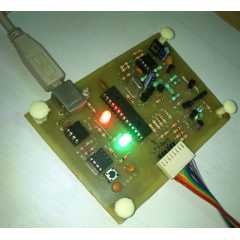
Pickit 2 Clone (Universal PIC Programmer)
Posted April 13, 2013 by Chris
“The PICkit™ 2 Programmer/Debugger is a low-cost development tool with an easy to use interface for programming and debugging Microchip’s Flash families of microcontrollers. The full featured Windows programming interface supports baseline, mid-range, PIC18,8-bit, 16-bit, and 32-bit microcontrollers, and many Microchip Serial EEPROM products.”
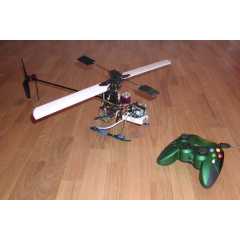
Cheap Robotic Microhelicopter HOWTO
Posted April 12, 2013 by Chris
“RC model helicopter prices have reached a point where all sorts of challenging (i.e. crash-prone) robotics projects become affordable. This document explains how to build a 300 g helicopter with embedded Linux and Bluetooth datalink from off-the shelf components for less than 500 EUR.”

PyroEDU: Boolean Algebra And Karnaugh Maps
Posted April 11, 2013 by Chris
Continuing with our new course: An Introduction To Digital Electronics, this week we’ll learn some more on the theory side of digital electronics with Lesson 4: Kmaps. Here is what this week’s lesson is all about:
Moving beyond number systems and logic gates, we have boolean equations and karnaugh maps. In this lesson we will learn two methods for simplifying logic circuits using boolean equations and kmaps and then we will implement the circuits to verify our math. This lesson is a tough one, so get your brain ready to be jammed full with information.

An Advanced Line Following Robot With PID control
Posted April 10, 2013 by Chris
“This tutorial details the process of building a line following robot. The robot can follow both black and white lines. It uses a sensor array to sense the line and a PID control to follow the line.”

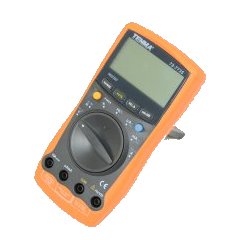
A Digital Multimeter In Review (Tenma 72-7735)
Posted April 9, 2013 by Chris
“In this article we will take a close look at the Tenma 72-7737 digital multimeter. Specifically, we’ll test out some of the more important functions of the multimeter, we’ll take a look inside to see what drives the multimeter, we’ll test out the PC interface and we’ll draw some conclusions based off of the overall experience.”

PCB Etching Agitator
Posted April 8, 2013 by Chris
“I have tried two different types of etching for PCBs: the bubble tank and the shallow dish method….The shallow dish method involves finding a small shallow dish and filling it with just enough etchant to cover the board. I measure out about 250ml each time. To etch, the tray is placed in a tub of hot water and agitated back and forward, while I inhale the fumes from the tank. Eek! Hence the need for a mechanical solution.”
Currently Hot

The Stunning Camera
shock your friends when they take your picture

A Simple File Server
make a file server on your pc

A Simple VHDL Counter
create a simple counter using vhdl with a cpld

An Introduction To VHDL
a small tutorial on using vhdl with a cpld

The Autonomous Drifter
autonomous drifter controlled by your laptop
Animatronics

Recent Articles

Arduino DDS Shield
build your own arduino based analog signal generator

A Digital Multimeter In Review (Tenma 72-7735)
learn about your typical digital multimeter in review

The PIC Annoy PCB
build something to annoy your co-workers

Automate Your Life With Cron
learn how to use cron for computer automation

Web Scraping For Weather Updates
learn how to use php to scrape the web

Creating A Web Server In Linux
learn how to make a lamp web server in linux

Stepper Motor Control With A stepRocker TMCM-1110
learn how a commercial stepper motor controller works

Arduino To PIC Wireless Proximity Motor Control
control a motor with a distance sensor wirelessly

PIC to Arduino Wireless Communication via XBee
use xbee to make a pic wirelessly talk to an arduino

Motor Control via Infrared Distance Sensor
control a motor simply by waving your hand

