



Get started learning to build your own electronics by following our FREE online courses below!
Learn More »
Categories
- animatronics (12)
- apple (11)
- arduino (179)
- art (41)
- articles (121)
- artificial intelligence (11)
- automation (421)
- avr (205)
- bitcoin (3)
- breadboard (9)
- cameras (57)
- cars (26)
- cell phones (28)
- clothing mods (21)
- console mods (26)
- dangerous (94)
- desktop mods (24)
- embedded (5)
- flying things (54)
- fpga (22)
- gaming creations (108)
- interface (225)
- internet (17)
- laptop mods (6)
- lasers (22)
- linux (7)
- magnetic (3)
- medical (12)
- microcontrollers (51)
- misc projects (152)
- msp (12)
- music (124)
- pic (90)
- projects (23)
- pyroedu (76)
- raspberry pi (26)
- robots (312)
- security (36)
- sensors (307)
- software (200)
- solar (19)
- stamp (9)
- tools (149)
- tutorials (98)
- Uncategorized (45)
- usb (44)
- wireless (256)
Sponsors
Build Like A Pyro!
Find many of the parts used on this site at our favorite online electronics shop


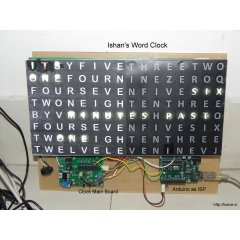
16×8 LED Word Clock
Posted November 23, 2012 by Chris
“The LED panel is composed of 8 individual panels of 4×4 LEDs. Each group of 4 such panels will be controlled by a MAX7219. Here are the schematics and board layouts of the 4×4 LED board and LED driver.”

PyroEDU Lesson 5 – The Inductor – Now Live!
Posted November 22, 2012 by Chris
Last week, we released the fourth lesson of the first PyroEDU course: An Introduction To Modern Electronics. This week we’re introducing the third and final basic circuit component: The Inductor.
The third and final component of what is known as the basic types of passive electrical components is called the inductor. In this lesson we take a look at the inductor’s alternative method of storing electrical charge that, while simliar to the capacitor, is done in a magnetic way.

Retro Style Arduino MP3 Player
Posted November 21, 2012 by Chris
“I present this new Arduino project: A full MP3 player based on Arduino.
As you can see in the photo, the idea was to build a standalone player, in the style of antique radios or ‘tapes’, in the age of Iphones ….”

Longboard Wheel Display (POV)
Posted November 20, 2012 by Chris
“So I’ve done persistence of vision displays before; there’s really nothing new there. The challenge this time was to make it small enough to fit on a 72mm longboard wheel, and to make it cheap enough so that I could mass produce it and sell it to folks in the area.”
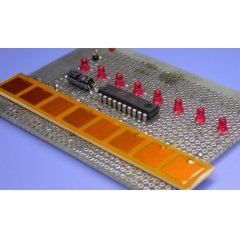
A Simple Capacitive Touch Sensor
Posted November 19, 2012 by Chris
“There are various touch sensors in different method, such as resistive (conductive film), optical (infrared), acoustic (SAW), capacitive and etc. This project is an experiment of capacitive touch sensor. This kind of touch sensor is well known as pointing device used in portable PCs.”
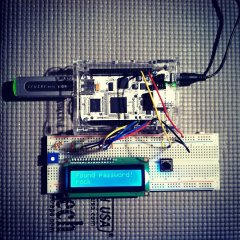
Cracking PDF Passwords via BeagleBone
Posted November 18, 2012 by Chris
“I am strong proponent of customized embedded systems; a single piece of hardware aimed at solving a single problem. If we have a particular task that is time intensive, repetitive, difficult to configure and somewhat ‘shady’, it is probably best to execute it in hardware. Lets consider a tool for recovering passwords from PDF-files.”
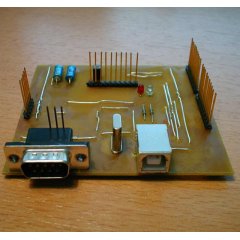
EZ-USB Breakout Board
Posted November 17, 2012 by Chris
“My first project using the EZ-USB microcontroller was the ‘EZ1’ test board in 2001 with two MAX521 8 channel DACs, a MAX127 8 channel 12 bit ADC (both with I²C interface), a RS232 connector and one for the Infineon FingerTip sensor as well as two LEDs. If you don’t have JTAG for debugging, two LEDs is the absolute minimum to trace the program execution.”
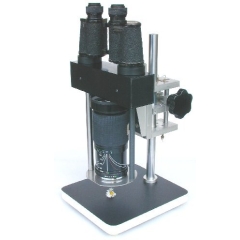
DIY Stereo-Zoom Microscope
Posted November 16, 2012 by Chris
“This project allows you to fabricate, with your own hands, a high quality stereo-zoom microscope, an instrument very useful for observing natural samples. As a bonus, it will serve to instill in young people, as well as adults, an interest in biology.”
PyroEDU Lesson 4 – The Capacitor – Now Live!
Posted November 15, 2012 by Chris
Last week, we released the third lesson of the first PyroEDU course: An Introduction To Modern Electronics. This week we’re introducing the second basic circuit component: The Capacitor. After getting a nice introduction to the resistor, it’s customary to learn about the second most common component in electronics, called the capacitor. This lesson performs some cool experiments and introduces the basic idea of storing electrical charge with capacitors.

Security Bot 2
Posted November 14, 2012 by Chris
“After completing my first Security Bot, I had come across the DFRobot 4WD platform. Once viewing some projects made with it, I was inspired for my second creation. This time around I decided to cram as many sensors into it as possible. My goal was to make this my main robot that I could continually expand upon.”
Currently Hot

The Stunning Camera
shock your friends when they take your picture

A Simple File Server
make a file server on your pc

A Simple VHDL Counter
create a simple counter using vhdl with a cpld

An Introduction To VHDL
a small tutorial on using vhdl with a cpld

The Autonomous Drifter
autonomous drifter controlled by your laptop
Animatronics
Recent Articles

Arduino DDS Shield
build your own arduino based analog signal generator

A Digital Multimeter In Review (Tenma 72-7735)
learn about your typical digital multimeter in review

The PIC Annoy PCB
build something to annoy your co-workers

Automate Your Life With Cron
learn how to use cron for computer automation

Web Scraping For Weather Updates
learn how to use php to scrape the web

Creating A Web Server In Linux
learn how to make a lamp web server in linux

Stepper Motor Control With A stepRocker TMCM-1110
learn how a commercial stepper motor controller works

Arduino To PIC Wireless Proximity Motor Control
control a motor with a distance sensor wirelessly

PIC to Arduino Wireless Communication via XBee
use xbee to make a pic wirelessly talk to an arduino

Motor Control via Infrared Distance Sensor
control a motor simply by waving your hand

