



Get started learning to build your own electronics by following our FREE online courses below!
Learn More »
Categories
- animatronics (12)
- apple (11)
- arduino (179)
- art (41)
- articles (121)
- artificial intelligence (11)
- automation (421)
- avr (205)
- bitcoin (3)
- breadboard (9)
- cameras (57)
- cars (26)
- cell phones (28)
- clothing mods (21)
- console mods (26)
- dangerous (94)
- desktop mods (24)
- embedded (5)
- flying things (54)
- fpga (22)
- gaming creations (108)
- interface (225)
- internet (17)
- laptop mods (6)
- lasers (22)
- linux (7)
- magnetic (3)
- medical (12)
- microcontrollers (51)
- misc projects (152)
- msp (12)
- music (124)
- pic (90)
- projects (23)
- pyroedu (76)
- raspberry pi (26)
- robots (312)
- security (36)
- sensors (307)
- software (200)
- solar (19)
- stamp (9)
- tools (149)
- tutorials (98)
- Uncategorized (45)
- usb (44)
- wireless (256)
Sponsors
Build Like A Pyro!
Find many of the parts used on this site at our favorite online electronics shop


8051 GSM Module PC and LCD Interface
Posted February 27, 2012 by Chris
“This project is an extension of interfacing microcontroller with hyperterminal and GSM module. The previous project explained a way to interface a GSM module with 8051 microcontroller where the information response and result codes received by the controller were sent back to computer to display them at HyperTerminal. In this project, the same output is displayed on a 16×2 LCD interface.”

Nikon Camera Intervalometer
Posted February 26, 2012 by Chris
“An intervalometer is a device that sends out a signal at regular intervals. When hooked up to a camera, they can be used to take time lapse images, bracket exposure lengths and precisely time long exposure images (over 30 seconds) that the built-in timer on the camera cannot normally generate. When hooked up to a flash, they can be used to create a strobe effect. Being this useful, there are many different DIY projects to make them.”

justDIY: LEDs As Sensors
Posted February 25, 2012 by Chris
“Each slave normally runs in a infinite loop, sampling the LED sensors as fast as it can and storing their values in a memory buffer. When a polling request is received from the master, an interrupt is generated which branches out of the sampling loop. I2C commands are pretty complex on paper, but merely a matter of setting and clearing bits in the digital world, so at 20mHz the pic handles them with lightning speed.”
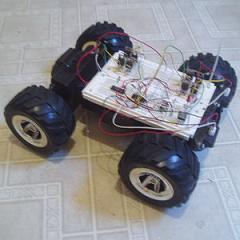
Sensor Driven Self-Guided RC Car
Posted February 24, 2012 by Chris
“Several years ago when I had the nerve to blow money on such things, I attempted to build a ’68 Volkswagen Beetle for The DARPA Grand Challenge. During that time I thought it would be fun to convert an RC car for self-guided operation. I bought the car from RadioShack for maybe $30, tore it apart, and promptly forgot about it completely.”

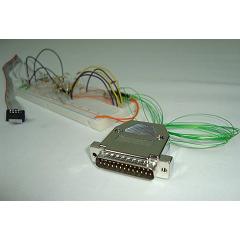
DIY FPGA Programmer (For Altera Devices)
Posted February 23, 2012 by Chris
“ This article will show you how to use standard electronics parts easily purchased at any electronics store to build your very own Altera FPGA and CPLD device programmer. The programmer will work flawlessly with Altera’s Quartus II software and take less than an hour to build. ”
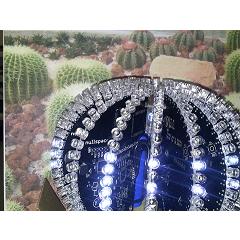
An AVR LED Blinky Ball
Posted February 22, 2012 by Chris
“Description: This spectaculously amazorbing ball that will mesmerise all who look at it, caturday will no longer be the same ! The Specs: There are 384 LEDs all individually controllable and programmable, it is compatible with the freely available Arduino IDE and AVR Studio, comes with sample source code and patterns to get you started, as well as being preprogrammed for instant blinky fun.”
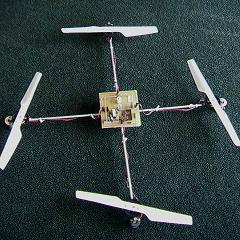
BXFlyer Four Rotor Helicopter
Posted February 21, 2012 by Chris
“I decided to build an autonomous flying robot about three years ago. I’ve converted RC cars to autonomous operation, so I thought that an RC helicopter might be a good place to start. I quickly discovered that the standard helicopter design would probably be too unstable in flight for my simple navigational and programming skills – but in searching the web I stumbled across the four rotor electric helicopter platform…and I was hooked!”

Astlab – Microcontroller Programming Robot
Posted February 20, 2012 by Chris
“I had a project which needed to have a lot of microcontrollers programmed. Surely I would have gone crazy if I had to go through and do each MCU by hand: program, encrypt, check, remove the MCU, No Way! This is mindless robot work. Thus this intelligent piece of aluminum, single-pass through, with five servo motors, and a little PCB sheet was born and the microcontroller burning robot came to be. ”

MoofTronic, A Miniature Synthesiser.
Posted February 19, 2012 by Chris
“It measures about 3cm x 1cm and is based around a 24pin ic holder. The notes are generated by software programmed onto a Picaxe 08M microcontroller which also has a small speaker mounted on it. It’s powered by a 9 volt battery.”

OWI Edge Robot Arm + PICAXE 20M2
Posted February 18, 2012 by Chris
“Even in its “natural” state the OWI Edge Robot Arm is a pretty interesting toy. It comes with DC motors and a cable switch box that allows you to manually control 1) Grip, 2)Wrist, 3) Elbow, 4) Shoulder, and 5) Base. Prices for the unit are typically less than $40. The greatest thing about the OWI Edge Robot Arm is that you assembly it yourself so you understand it well and it is easy to customize.”
Currently Hot

Simple Touch Screen Interface
build a resistive touch screen driver and interface

TTL Logic Beeping Down Counter
a down counting movie prop imitation with playdough

TTL Tilt Sensor via Accelerometer
build a ttl logic tilt sensor with led output

VGA Interface Using Only 74xx IC’s
build a vga interface with digital logic chips

PS/2 Keyboard To 16×2 LCD
ps2 keyboard for input, 16x2 lcd for output
Animatronics

Recent Articles

Arduino DDS Shield
build your own arduino based analog signal generator

A Digital Multimeter In Review (Tenma 72-7735)
learn about your typical digital multimeter in review

The PIC Annoy PCB
build something to annoy your co-workers

Automate Your Life With Cron
learn how to use cron for computer automation

Web Scraping For Weather Updates
learn how to use php to scrape the web

Creating A Web Server In Linux
learn how to make a lamp web server in linux

Stepper Motor Control With A stepRocker TMCM-1110
learn how a commercial stepper motor controller works

Arduino To PIC Wireless Proximity Motor Control
control a motor with a distance sensor wirelessly

PIC to Arduino Wireless Communication via XBee
use xbee to make a pic wirelessly talk to an arduino

Motor Control via Infrared Distance Sensor
control a motor simply by waving your hand

