



Get started learning to build your own electronics by following our FREE online courses below!
Learn More »
Categories
- animatronics (12)
- apple (11)
- arduino (179)
- art (41)
- articles (121)
- artificial intelligence (11)
- automation (421)
- avr (205)
- bitcoin (3)
- breadboard (9)
- cameras (57)
- cars (26)
- cell phones (28)
- clothing mods (21)
- console mods (26)
- dangerous (94)
- desktop mods (24)
- embedded (5)
- flying things (54)
- fpga (22)
- gaming creations (108)
- interface (225)
- internet (17)
- laptop mods (6)
- lasers (22)
- linux (7)
- magnetic (3)
- medical (12)
- microcontrollers (51)
- misc projects (152)
- msp (12)
- music (124)
- pic (90)
- projects (23)
- pyroedu (76)
- raspberry pi (26)
- robots (312)
- security (36)
- sensors (307)
- software (200)
- solar (19)
- stamp (9)
- tools (149)
- tutorials (98)
- Uncategorized (45)
- usb (44)
- wireless (256)
Sponsors
Build Like A Pyro!
Find many of the parts used on this site at our favorite online electronics shop


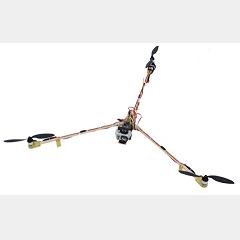
ATmega Tricopter (V2)
Posted March 16, 2011 by Chris
The Tricopter is an awesome little multi-blade helicopter. It uses an ATmega for the control loop from the sensor feedback and has a camera mounted on its front so you can see where it’s going. Take a look at the action videos, a pretty impressive little project.

Remote Controlled AV Regulator
Posted March 12, 2011 by Chris
Using an Atmel ATmega, this project is able to regulate how much power an AC device (Lamp/Fan) receives from the wall. The project write-up is extremely detailed with all schematics and software freely available to look at and for download.
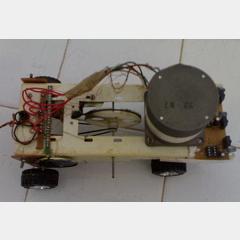
Basic Uc Controlled Car
Posted March 6, 2011 by Chris
This project goes through the few fundamentals necessary for making a robotic car. There’s nothing fancy here, just the basics of H-brigdes, keypad circuits and stepper/dc motor control. Take a look if you’re just beginning with any of those topics, you’ll learn something.
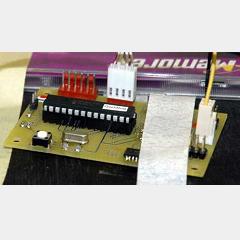
PIC PID Micro-Controller
Posted March 4, 2011 by Chris
If motor and motion control is what you do, then you’ll want to take a look at this write-up. It goes through how to implement PID control using a PIC which is a much more robust method of controlling motors where error and stability issues seem to virtually disappear from servo systems.
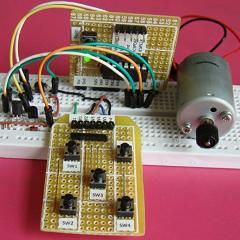
Embedded Lab: DC Motors
Posted February 26, 2011 by Chris
Basic motor control is achieved through using what is known as an ‘H-Bridge’. The name comes from the circuit looking like the letter H. It allows current to pass through a DC motor in two different directions. With a little PWM added in speed can also be controlled. This embedded lab shows you how to do all of this is a nice 3 page tutorial.
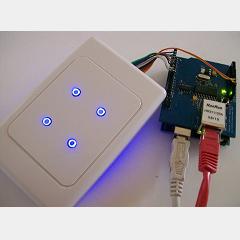
Arduino For Home Automation
Posted February 23, 2011 by Chris
Today’s project shows you how to use an Arduino with an ethernet shield to begin automating your home. The example the project uses is building a web service to control light switches in a room.

The 3 in 1 Robot
Posted February 20, 2011 by Chris
This robot has built in functionality for line following, object avoiding and ‘victim finding’. A PIC micro allows to it be able to do all these at once. Check the project write-up to see the hardware schematics, software & parts list.

WFR – a Dead Reckoning Robot
Posted January 29, 2011 by Chris
Any attempt at dead-reckoning in autonomous vehicles is at present extremely difficult. Without expensive sensors the accumulated error grows exponentially with time. The WFR robot takes a shot at trying out some dead-reckoning navigation techniques for location tracking.

Feral Robotic Dogs
Posted January 28, 2011 by Chris
Vestal designers purchased cheap robotic toy dogs, reverse engineered their CPU’s, and reprogrammed them to “hunt” toxic waste. Building upon this experience, later models (pictured above) were built from scratch to meet the all-terrain needs of the urban environment.

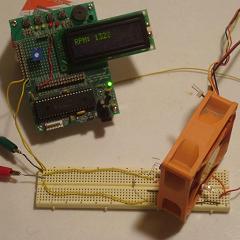
Build A Digital Tachometer/RPM Counter
Posted January 27, 2011 by Chris
The tachometer is not a new invention, but being able to build a digital tachometer in less than an hour by yourself shows you how far technology has come. This tutorial guides you through the process of building your own PIC based rpm counter!
Currently Hot

Build A ByteBlaster
build a cable so you can program your fpga/cpld

Interfacing A PIC To LCD (16×2)
control an lcd display with a pic

Short Range Personal Radar
a complete radar system using the ir range sensor

The IR Range Sensor
learn the basics of the sharp ir range sensor

Program the DE2 Board
download a simple program to the de2 board
Animatronics

Recent Articles

Arduino DDS Shield
build your own arduino based analog signal generator

A Digital Multimeter In Review (Tenma 72-7735)
learn about your typical digital multimeter in review

The PIC Annoy PCB
build something to annoy your co-workers

Automate Your Life With Cron
learn how to use cron for computer automation

Web Scraping For Weather Updates
learn how to use php to scrape the web

Creating A Web Server In Linux
learn how to make a lamp web server in linux

Stepper Motor Control With A stepRocker TMCM-1110
learn how a commercial stepper motor controller works

Arduino To PIC Wireless Proximity Motor Control
control a motor with a distance sensor wirelessly

PIC to Arduino Wireless Communication via XBee
use xbee to make a pic wirelessly talk to an arduino

Motor Control via Infrared Distance Sensor
control a motor simply by waving your hand

