



Get started learning to build your own electronics by following our FREE online courses below!
Learn More »
Categories
- animatronics (12)
- apple (11)
- arduino (179)
- art (41)
- articles (121)
- artificial intelligence (11)
- automation (421)
- avr (205)
- bitcoin (3)
- breadboard (9)
- cameras (57)
- cars (26)
- cell phones (28)
- clothing mods (21)
- console mods (26)
- dangerous (94)
- desktop mods (24)
- embedded (5)
- flying things (54)
- fpga (22)
- gaming creations (108)
- interface (225)
- internet (17)
- laptop mods (6)
- lasers (22)
- linux (7)
- magnetic (3)
- medical (12)
- microcontrollers (51)
- misc projects (152)
- msp (12)
- music (124)
- pic (90)
- projects (23)
- pyroedu (76)
- raspberry pi (26)
- robots (312)
- security (36)
- sensors (307)
- software (200)
- solar (19)
- stamp (9)
- tools (149)
- tutorials (98)
- Uncategorized (45)
- usb (44)
- wireless (256)
Sponsors
Build Like A Pyro!
Find many of the parts used on this site at our favorite online electronics shop


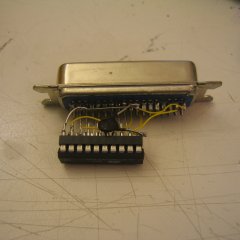
Standalone HPLJ Display Hack
Posted January 23, 2013 by Chris
“A nice thing about the HP laserjets is that they have a little display, and you can use PJL, a sort of controlling language, to change what’s displayed on it, using a bit of code that runs on a PC. Problem was: I didn’t have a PC connected to the laserjet, so I had to divine a standalone solution.”

Felix @ Daddio Robotics
Posted January 22, 2013 by Chris
“Felix is one of the first robots I created using the kinect sensor. Felix uses NPC Robotics 24V Electric Gear Motor Set – R81, R82. they are basically wheelchair motors. With 10? solid wheels and custom aluminum hubs. For the Robot Stroller kit I use 2 of the Jazzy Select Elite, Coupled with 2 of the 12 inch tires.”

Quadcopter Control Board
Posted January 21, 2013 by Chris
“I used the standard version of Eagle to create a four-layer board with internal ground and power planes. The board carries an LPC1343 microprocessor which takes input from an onboard sensor stick containing accelerometer, compass, and gyro chips. After some sensor fusion and optionally in response to joystick input, the board provides PWM signals to four brushless DC motor controllers at a rate of 200Hz.”

Real-time Controlled Robotic Arm
Posted January 20, 2013 by Chris
“I had always wanted to create a robotic arm and control it with a joystick or something. I had also recently been playing around with the open source 3D program, Blender 2.49 (this does not work in Blender 2.5+). After realizing the potential of Blender’s built in Python scripting capabilities, I figured why not let Blender control it!…So I did!”

DIY Home Automation Using Twilio, PowerSwitch, Arduino, and Pusher
Posted January 19, 2013 by Chris
“You may have seen my recent blog post about building a Phone-controlled Robot using Twilio. Since then, I’ve had ideas for new Twilio + Arduino mashups pouring in from the community. Today is the second post in our new series of Twilio Hardware mashups – build your own home automation solution using Twilio SMS, PowerSwitch, Arduino, and PusherApp.”

Building An AVR Project Without A Board
Posted January 18, 2013 by Chris
“It is rare that I do a micro project without using a PCB or a prototyping board of some kind. Something like a arduino Pro Mini is cheap enough but they are still bigger and more expensive than a bare chip. Most of my home project don’t need a crystal clock and often only use a small number of I/O pins.”

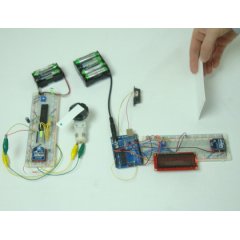
Arduino To PIC Wireless Proximity Motor Control
Posted January 17, 2013 by Chris
“In this article, we will show you how to build a system where the input and output have seperate microcontrollers and are linked together using XBee modules. The input system will use an infrared distance sensor to measure how far away an object is from the sensor and the output will drive a standard DC motor using a power transistor.”
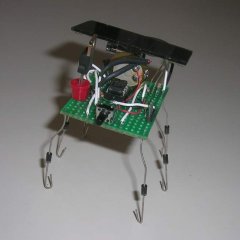
Solar Powered Picaxe Microbot (Vibrobot)
Posted January 16, 2013 by Chris
“This is a small solar powered progammable robot. It’s design was inspired by BEAM robots, but whereas those devices are usually entirely hardware based, I favor systems which rely on software. Allowing programmability, however basic, introduces a whole new level of flexibility.”

The Meta-EWI
Posted January 15, 2013 by Chris
“The META-EWI is a modified EWI (Akai’s Electric Wind Instrument) to which was added a whole new set of controllers based on sensor technologies, specifically eight continuous controllers and 16 digital switches. These clearly succeed at stretching the expressiveness and the range of musical gestures found on the original instrument allowing the musician to have a more complete and far reaching control of a great variety of meaningful musical parameters.”

Knock Box (repeats rhythm used when knocking on the lid)
Posted January 14, 2013 by Chris
“Doing some initial research on automatic door knockers, I came across an excellent post describing a secret knock-detecting door. This looked like a perfect starting point, so I decided to recreate it with my own hardware. To simplify input and output, I started with a simple button for input and an LED for output. I took the code provided and modified it so that it replayed rather than validating the recorded knock pattern.”
Currently Hot

The Stunning Camera
shock your friends when they take your picture

A Simple File Server
make a file server on your pc

A Simple VHDL Counter
create a simple counter using vhdl with a cpld

An Introduction To VHDL
a small tutorial on using vhdl with a cpld

The Autonomous Drifter
autonomous drifter controlled by your laptop
Animatronics

Recent Articles

Arduino DDS Shield
build your own arduino based analog signal generator

A Digital Multimeter In Review (Tenma 72-7735)
learn about your typical digital multimeter in review

The PIC Annoy PCB
build something to annoy your co-workers

Automate Your Life With Cron
learn how to use cron for computer automation

Web Scraping For Weather Updates
learn how to use php to scrape the web

Creating A Web Server In Linux
learn how to make a lamp web server in linux

Stepper Motor Control With A stepRocker TMCM-1110
learn how a commercial stepper motor controller works

Arduino To PIC Wireless Proximity Motor Control
control a motor with a distance sensor wirelessly

PIC to Arduino Wireless Communication via XBee
use xbee to make a pic wirelessly talk to an arduino

Motor Control via Infrared Distance Sensor
control a motor simply by waving your hand

