



Get started learning to build your own electronics by following our FREE online courses below!
Learn More »
Categories
- animatronics (12)
- apple (11)
- arduino (179)
- art (41)
- articles (121)
- artificial intelligence (11)
- automation (421)
- avr (205)
- bitcoin (3)
- breadboard (9)
- cameras (57)
- cars (26)
- cell phones (28)
- clothing mods (21)
- console mods (26)
- dangerous (94)
- desktop mods (24)
- embedded (5)
- flying things (54)
- fpga (22)
- gaming creations (108)
- interface (225)
- internet (17)
- laptop mods (6)
- lasers (22)
- linux (7)
- magnetic (3)
- medical (12)
- microcontrollers (51)
- misc projects (152)
- msp (12)
- music (124)
- pic (90)
- projects (23)
- pyroedu (76)
- raspberry pi (26)
- robots (312)
- security (36)
- sensors (307)
- software (200)
- solar (19)
- stamp (9)
- tools (149)
- tutorials (98)
- Uncategorized (45)
- usb (44)
- wireless (256)
Sponsors
Build Like A Pyro!
Find many of the parts used on this site at our favorite online electronics shop


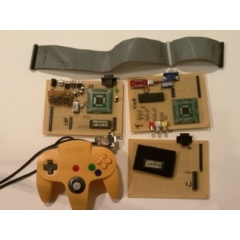
GameSphere DIY Arm7 Gaming Console
Posted May 10, 2015 by Chris
"This game console has an Atmel ARM7 microcontroller AT91R40008 that is capable of running at 100MHz if overclocked. It has the processing power to run simple games like Super Mario."
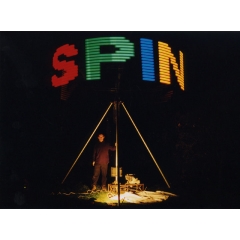
Spin – Spinning Light Drawing Images On The Retina
Posted May 9, 2015 by Chris
"Spin uses Persistence of Vision to create the illusion of a cylindrical digital display (computer screen), 12 feet tall and 12 feet in diameter. Vertical columns of multi-color LED (light emitting diode) clusters spin around a vertical axis at 90 revolutions per minute. At a radius of 6 feet, they move at 41 miles per hour."
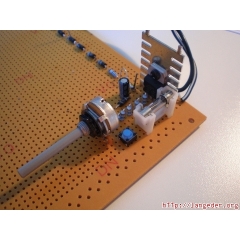
PyroEDU Lesson On Tilt Sensors!
Posted May 7, 2015 by Chris
This week we’re diving into tilt sensors in our new PyroEDU course: An Introduction To Sensors. In this lesson we’ll look at everything there is to know about Tilt Sensors and perform a simple experiment to give you a hands-on feel for how they work. Here’s a quick intro of what this PyroEDU lesson is all about:
The mechanical tilt sensor is one of the most basic types of sensors available. In this lesson we will learn how the tilt sensor uses some conductive balls to detect when the sensor has passed ± 90° of tilt.
Chlonos An Open Source Talking Multimedia Clock Gadget
Posted May 6, 2015 by Chris
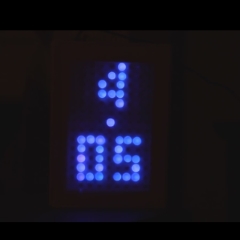
"Chlonos is an electronic gadget with a brain, a display, some sensors and a voice. It’s something interesting to put on your wall. It can measure temperature and light, it keeps track of the time and will tell you about it all."
ATtiny2313 Ballistic Chronograph
Posted May 4, 2015 by Chris
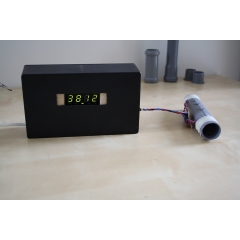
"A ballistic chronograph is used to detect the speed of a projectile shot through a sensor port. The simplest type of chronograph design is based on finding the average speed of the projectile between two ports. This is as easy as dividing the distance between the two sensor ports with time taken to travel between the ports."
Touch Screen Controlled R/C Car
Posted May 3, 2015 by Chris
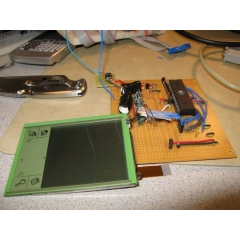
"Essentially, the RC car will follow a path drawn by the user on the touch screen as it is drawn in real time. Speed and direction of the car was extrapolated from the user drawn path and sent to the car through radio frequency transmission. We utilized a touch screen taken from an old Palm Pilot, the chassis of an old RC car (including the motors), and a transmitter receiver pair."

PCB Rax – Circuit Board Holding System
Posted May 2, 2015 by Chris
"PCB Rax is an easy to use, versatile circuit board holder for repair, prototyping, and assembly that can hold nearly any shape of circuit board. Sure there are other circuit board holders on the market, but they don’t hold odd shaped boards, and they don’t allow you to easily move them around. "
PyroEDU Sensors Course Starts Today!
Posted April 30, 2015 by Chris
This week we’re launching our brand new course: An Introduction To Sensors. We’ll start by looking at The Introduction. Here’s a quick intro of what this PyroEDU lesson is all about:
Want to learn about the different types of electronic sensors? Please start here! This lesson explains the course content, what expectations you should have and what parts are needed for the course.
Homebrew Cray-1A Using Spartan-3 FPGA
Posted April 29, 2015 by Chris
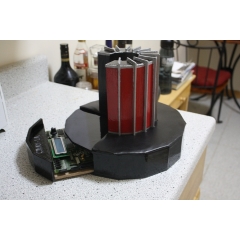
"This project falls purely into the ‘because I can!’ category – I was poking around the internet one day looking for a Cray emulator and came up dry, so I decided to do something about it. Luckily, the Cray-1 hardware reference manual turned out to be useful enough that implementing most of this was pretty straightforward. The Cray-1 is one of those iconic machines that just makes you say ‘Now that‘s a super computer!’ "
Currently Hot

A Simple File Server
make a file server on your pc

A Simple VHDL Counter
create a simple counter using vhdl with a cpld

An Introduction To VHDL
a small tutorial on using vhdl with a cpld

The Autonomous Drifter
autonomous drifter controlled by your laptop
An Introduction To Verilog
a small tutorial on using verilog with a cpld
Animatronics

Recent Articles

Arduino DDS Shield
build your own arduino based analog signal generator

A Digital Multimeter In Review (Tenma 72-7735)
learn about your typical digital multimeter in review

The PIC Annoy PCB
build something to annoy your co-workers

Automate Your Life With Cron
learn how to use cron for computer automation

Web Scraping For Weather Updates
learn how to use php to scrape the web

Creating A Web Server In Linux
learn how to make a lamp web server in linux

Stepper Motor Control With A stepRocker TMCM-1110
learn how a commercial stepper motor controller works

Arduino To PIC Wireless Proximity Motor Control
control a motor with a distance sensor wirelessly

PIC to Arduino Wireless Communication via XBee
use xbee to make a pic wirelessly talk to an arduino

Motor Control via Infrared Distance Sensor
control a motor simply by waving your hand

