



Get started learning to build your own electronics by following our FREE online courses below!
Learn More »
Categories
- animatronics (12)
- apple (11)
- arduino (179)
- art (41)
- articles (121)
- artificial intelligence (11)
- automation (421)
- avr (205)
- bitcoin (3)
- breadboard (9)
- cameras (57)
- cars (26)
- cell phones (28)
- clothing mods (21)
- console mods (26)
- dangerous (94)
- desktop mods (24)
- embedded (5)
- flying things (54)
- fpga (22)
- gaming creations (108)
- interface (225)
- internet (17)
- laptop mods (6)
- lasers (22)
- linux (7)
- magnetic (3)
- medical (12)
- microcontrollers (51)
- misc projects (152)
- msp (12)
- music (124)
- pic (90)
- projects (23)
- pyroedu (76)
- raspberry pi (26)
- robots (312)
- security (36)
- sensors (307)
- software (200)
- solar (19)
- stamp (9)
- tools (149)
- tutorials (98)
- Uncategorized (45)
- usb (44)
- wireless (256)
Sponsors
Build Like A Pyro!
Find many of the parts used on this site at our favorite online electronics shop


Remote Controlled AV Regulator
Posted March 12, 2011 by Chris
Using an Atmel ATmega, this project is able to regulate how much power an AC device (Lamp/Fan) receives from the wall. The project write-up is extremely detailed with all schematics and software freely available to look at and for download.

Rotary Encoder Demonstration
Posted March 11, 2011 by Chris
Today’s project write-up introduces you to the rotary encoder. This is a very simple type of encoder that counts rotational movement and gives signal feedback so that you can track the rotational movement. The project uses a PIC and an LED driver to demonstrate how well the sensor works with the PIC.

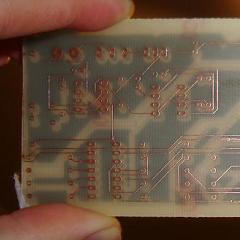
DIY 2 Layer PCB’s
Posted March 10, 2011 by Chris
This PyroElectro tutorial shows you have to step beyond making simple 1 layer PCBs and how to make your own 2 layer PCBs at home, completely DIY. The example design is a simple LED flashing circuit, but it requires 2 layers. Take a look and see how it’s made.

Microcontroller Voltmeter / Ammeter
Posted March 9, 2011 by Chris
This project builds a pretty decent volt/ampmeter using an ATmega8 microcontroller. He designs his own PC board for the project and explains out all of the details in the project write-up. Hardware schematics and lots of pictures guide you through building this project.

External Interrupts on an ATmega168
Posted March 8, 2011 by Chris
If you’re an AVR fan, here’s a great tutorial on getting external interrupts working. It explains everything from the schematic hardware level through the software level of interrupt addresses. Using interrupts is a necessity for embedded systems, so better to learn about them now, rather then later.

Arduino Etch-a-Sketch
Posted March 7, 2011 by Chris
Another great arduino project builds an electric Ethch a Sketch. The mechanics are drop dead simple along with the electronics so this is a great project for anyone just starting with the arduino. The project write-up has all the details you’d need to build your own, schematics and software included.
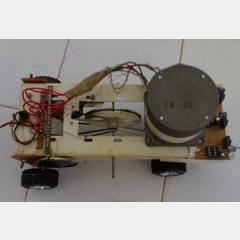
Basic Uc Controlled Car
Posted March 6, 2011 by Chris
This project goes through the few fundamentals necessary for making a robotic car. There’s nothing fancy here, just the basics of H-brigdes, keypad circuits and stepper/dc motor control. Take a look if you’re just beginning with any of those topics, you’ll learn something.

Magnetic Levitation
Posted March 5, 2011 by Chris
With proper electronic control, stable magnetic levitation of objects is actually quite possible. This project does just that too. Using only a handful of electric parts and an electromagnetic, levitation goes from black magic to reality.
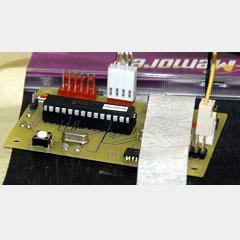
PIC PID Micro-Controller
Posted March 4, 2011 by Chris
If motor and motion control is what you do, then you’ll want to take a look at this write-up. It goes through how to implement PID control using a PIC which is a much more robust method of controlling motors where error and stability issues seem to virtually disappear from servo systems.

Mint Box FM Bug Transmitter
Posted March 3, 2011 by Chris
Today’s PyroElectro Project takes you through the process of building an FM bug inside of a small mint box! It only takes 17 electrical parts to build the bug, but you also need a lot of patience and perseverance. If you want to get started in wireless electronics, don’t miss this project!
Currently Hot

Program the DE2 Board
download a simple program to the de2 board

Programming the eBOX
create & download an os image to the eBOX-II
The Altera DE2 Board
a simple introduction for setting up the DE2 board
The eBOX-II Embedded PC
learn the in's and out's of the eBOX-II

Stepper Motor Control
control a stepper motor using an LMD18245
Animatronics

Recent Articles

Arduino DDS Shield
build your own arduino based analog signal generator

A Digital Multimeter In Review (Tenma 72-7735)
learn about your typical digital multimeter in review

The PIC Annoy PCB
build something to annoy your co-workers

Automate Your Life With Cron
learn how to use cron for computer automation

Web Scraping For Weather Updates
learn how to use php to scrape the web

Creating A Web Server In Linux
learn how to make a lamp web server in linux

Stepper Motor Control With A stepRocker TMCM-1110
learn how a commercial stepper motor controller works

Arduino To PIC Wireless Proximity Motor Control
control a motor with a distance sensor wirelessly

PIC to Arduino Wireless Communication via XBee
use xbee to make a pic wirelessly talk to an arduino

Motor Control via Infrared Distance Sensor
control a motor simply by waving your hand

