



Get started learning to build your own electronics by following our FREE online courses below!
Learn More »
Categories
- animatronics (12)
- apple (11)
- arduino (179)
- art (41)
- articles (121)
- artificial intelligence (11)
- automation (421)
- avr (205)
- bitcoin (3)
- breadboard (9)
- cameras (57)
- cars (26)
- cell phones (28)
- clothing mods (21)
- console mods (26)
- dangerous (94)
- desktop mods (24)
- embedded (5)
- flying things (54)
- fpga (22)
- gaming creations (108)
- interface (225)
- internet (17)
- laptop mods (6)
- lasers (22)
- linux (7)
- magnetic (3)
- medical (12)
- microcontrollers (51)
- misc projects (152)
- msp (12)
- music (124)
- pic (90)
- projects (23)
- pyroedu (76)
- raspberry pi (26)
- robots (312)
- security (36)
- sensors (307)
- software (200)
- solar (19)
- stamp (9)
- tools (149)
- tutorials (98)
- Uncategorized (45)
- usb (44)
- wireless (256)
Sponsors
Build Like A Pyro!
Find many of the parts used on this site at our favorite online electronics shop


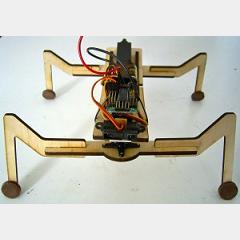
Flatpack Walker With Radar
Posted August 16, 2011 by Chris
Adding a little intelligence to your robot is as simple as adding a proximity sensor. The flatpack walker uses servo motors to walk and the sensor to know when there is something in its way. The software and construction details are all in the article.
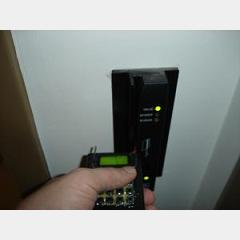
Magnetic Card Spoofer
Posted August 6, 2011 by Chris
Here’s an article that presents a rather innovative look at how to spoof magnetic card readers. The spoofer uses an atmega168 connected up to an electromagnet. The article has the source code, hardware schematic and action shots, don’t miss it!
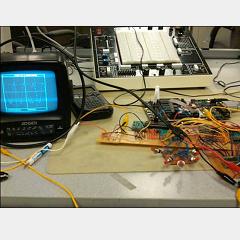
Homebrew Digital Oscilloscope
Posted July 31, 2011 by Chris
Here’s an article describing a conservatively but well designed digital oscilloscope. The Digital part here means the main input is into a DAC instead of op-amps. Atmel microcontrollers are used for processing and video display. The article describes all the details of design and theory of operation, so go build your own!

Pythagoras: A Drawing Delta Robot
Posted July 30, 2011 by Chris
This article introduces a gigantic etch-a-sketch in the form of a triple hinged robot. To control the system, either a capacitive touch sensor is used or pre-programed drawing movements. 3 Large servos control the 3 arms of the robot and an MSP430 launchpad is used for the control system for the core I/O.
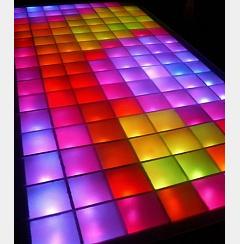
RGB LED Coffee Table
Posted July 29, 2011 by Chris
In a demo of what the MSP430 can do, here’s an LED Coffee Table that groves with your music. The MSP430 is used as a controller and external software catches the FFT of your music telling the controller how everything should light up to flow with the music. If you like this project give it a Vote at TI’s website.
Interactive 360º Light Field Display
Posted July 25, 2011 by Chris
This project puts any conventional POV to shame by using a different method for tricking our eyes. This 3D display uses an anisotropic spinning mirror to project images from a separate camera that is outputting video at 5000 FPS. An FPGA is used to conquer the raw speed used by this display system.
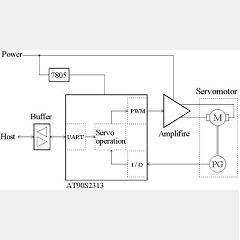
DC Motor PI Servo Controller
Posted July 24, 2011 by Chris
Servo motors are used everywhere in industry, commercially most people only see them in RC hobby electronics as small servo units. However you use them, it’s important to understand what is going on inside them. This article shows you how to build your own DC servo motor controller. The system uses PI feedback for correcting the position error.


Dual Motor Control – SN754410
Posted July 21, 2011 by Chris
Moving away from the more popular L298 this week’s PyroElectro tutorial looks at how to use the SN754410 to control speed and direction of two DC motors. The example system uses a PIC MCU and some trimpot inputs to control each motor independently. If you’re looking to get started with reliable motor control, it doesn’t get any easier than this.
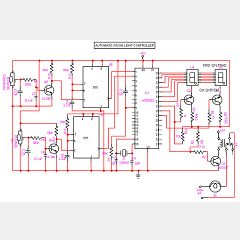
Automated Light Control/Visitor Counter
Posted July 17, 2011 by Chris
Today’s article covers some simple ground, specifically using 555 timers with IR transmitter/receiver pairs. The project uses these to keep track of how many people come in and out of the room as well as turning the lights on when someone enters. The circuit is straight forward, but gives insight on how to create the common 38 KHz carrier frequency IR circuits use.
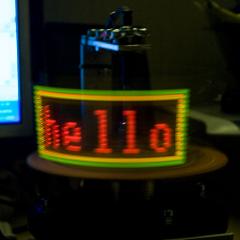
AVR Rotating LED Display
Posted July 12, 2011 by Chris
DIY Rotating displays, sometimes called POV’s because of their use of persistence of vision, have become more common and are a very fun project to build. This article shows the process of building a quality rotating led display on a PCB with pictures, video, software and the hardware schematics of the project.
Currently Hot

Arduino LED Flashing Introduction
begin your journey learning about the arduino here

Wireless XBee Motor Control
wireless dual dc motor control via xbee

DIY Mini PIC Development Board
build your own quick, easy and awesome pic dev board

Wireless XBee Pan/Tilt With Servos
build a wireless pan/tilt system for your camera

PIC Prototyping: MPLABX + PICKIT3 Intro
learn how to use mplabx with the new pickit3
Animatronics

Recent Articles

Arduino DDS Shield
build your own arduino based analog signal generator

A Digital Multimeter In Review (Tenma 72-7735)
learn about your typical digital multimeter in review

The PIC Annoy PCB
build something to annoy your co-workers

Automate Your Life With Cron
learn how to use cron for computer automation

Web Scraping For Weather Updates
learn how to use php to scrape the web

Creating A Web Server In Linux
learn how to make a lamp web server in linux

Stepper Motor Control With A stepRocker TMCM-1110
learn how a commercial stepper motor controller works

Arduino To PIC Wireless Proximity Motor Control
control a motor with a distance sensor wirelessly

PIC to Arduino Wireless Communication via XBee
use xbee to make a pic wirelessly talk to an arduino

Motor Control via Infrared Distance Sensor
control a motor simply by waving your hand

