



Get started learning to build your own electronics by following our FREE online courses below!
Learn More »
Categories
- animatronics (12)
- apple (11)
- arduino (179)
- art (41)
- articles (121)
- artificial intelligence (11)
- automation (421)
- avr (205)
- bitcoin (3)
- breadboard (9)
- cameras (57)
- cars (26)
- cell phones (28)
- clothing mods (21)
- console mods (26)
- dangerous (94)
- desktop mods (24)
- embedded (5)
- flying things (54)
- fpga (22)
- gaming creations (108)
- interface (225)
- internet (17)
- laptop mods (6)
- lasers (22)
- linux (7)
- magnetic (3)
- medical (12)
- microcontrollers (51)
- misc projects (152)
- msp (12)
- music (124)
- pic (90)
- projects (23)
- pyroedu (76)
- raspberry pi (26)
- robots (312)
- security (36)
- sensors (307)
- software (200)
- solar (19)
- stamp (9)
- tools (149)
- tutorials (98)
- Uncategorized (45)
- usb (44)
- wireless (256)
Sponsors
Build Like A Pyro!
Find many of the parts used on this site at our favorite online electronics shop


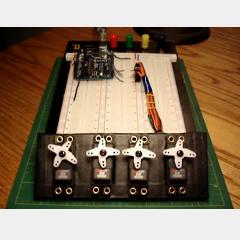
Arduino + Python 4-Axis Servo Control
Posted November 29, 2011 by Chris
“This tutorial will describe how to use Arduino to control a bank of four independent RC servos with your PC (or Mac, or *nix Box), using a USB cable and a modular Arduino-Python software stack.”
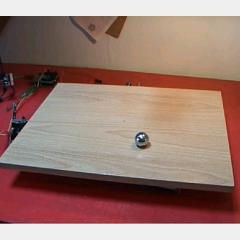
Ball Balance Machine II
Posted November 28, 2011 by Chris
If you’ve ever wanted to build the famous ball and plate balancing project, here’s the project with some great documentation. A PC tells an Arduino how to move two servos which move the marble across the board where you want it to go. A webcam tells the PC where the ball is on the board. Take a look!
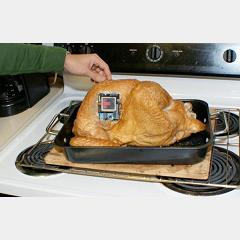
Thanksgiving Turkey Shield
Posted November 24, 2011 by Chris
We’ll post-pone the final Taming Your Music Collection tutorial until next week in order to take some time and celebrate Thanksgiving. Happy Holidays and here’s a TurkeyShield to celebrate:“In the DIY spirit, of course, here’s a 5-step guide to making your own 8-bit embedded turkey:”

A Morse Code Keyer In VHDL
Posted November 11, 2011 by Chris
This VHDL morse code keyer is written in VHDL by Jim Brady. He has posted the source (for a Xilinx Spartan 3A). He also posted his vintage keyer designs from the 1960’s and 1970’s. A nice throw back using some modern tech.

FPGA MD5 Cracker
Posted November 9, 2011 by Chris
“For my Digital Systems Laboratory (ECE 385) at the University of Illinois I had to do a final project using a field-programmable gate array (FPGA). My partner and I designed a hardware implementation of the MD5 algorithm and used it to crack MD5 password hashes. A FPGA allows you to prototype digital circuits by utilizing a hardware description language such as VHDL.”
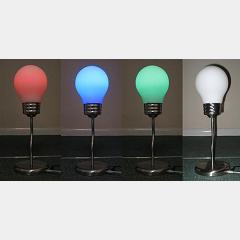
Dynamic Ambient Color Lamp
Posted October 22, 2011 by Chris
This article offers a very detailed write-up of how the author built an ambient lamp with network control capability. Software and hardware theory and design are explained thoroughly and available in the article, good for some light saturday-sunday reading.

TTL Logic Beeping Down Counter
Posted October 20, 2011 by Chris
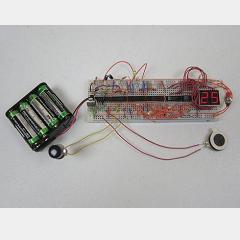
My crazy 7400 logic circuits continue with this week’s parody of a movie prop from Iron Man 2. The circuit built in this project is a beeping down counter and since I didn’t see this classic circuit entered into the 7400contest, I figured there’s time left for one last entry. Just like in Iron Man 2 there’s a little red button to start the countdown, a dual 7 segment led display and a nice ‘beep’ for each count.
TTL Tilt Sensor via Accelerometer
Posted October 14, 2011 by Chris
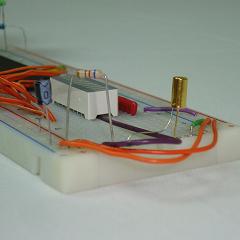
Time for more accelerometer stuff! Since the 7400 logic competition is allowing more than one entry, I figured why not build something else? This tilt sensor was designed using only 7400 TTL discrete logic parts, so there is no software involved. It uses an accelerometer sensor’s output for X and Y axis to show you how much the board is tilted on an 8×8 LED matrix display.
PIC-Based Temperature Alarm
Posted October 10, 2011 by Chris
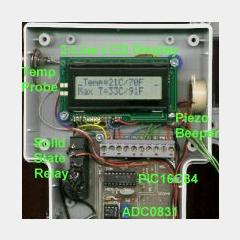
“The unit is designed to function (user configurable) either as a temperature alarm or a thermostat – the only difference being that with an alarm an intermittent beep is produced when a limit is exceeded.” The open source hardware schematic and PIC software are provided in the article, along with an in depth explanation of how the system works.
Intelligent NiCd/NiMH Battery Charger
Posted October 4, 2011 by Chris
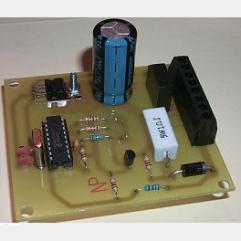
“This cheap and easy to build NiCd/NiMH Battery Charger is suitable for automatically charging a wide range of batteries for many applications. Proper chargers are usually expensive and cheap chargers supplied with the original equipment often incorrectly charge the cells and dramatically shorten their life.”
Currently Hot

Arduino LED Flashing Introduction
begin your journey learning about the arduino here

Wireless XBee Motor Control
wireless dual dc motor control via xbee

DIY Mini PIC Development Board
build your own quick, easy and awesome pic dev board

Wireless XBee Pan/Tilt With Servos
build a wireless pan/tilt system for your camera

PIC Prototyping: MPLABX + PICKIT3 Intro
learn how to use mplabx with the new pickit3
Animatronics

Recent Articles

Arduino DDS Shield
build your own arduino based analog signal generator

A Digital Multimeter In Review (Tenma 72-7735)
learn about your typical digital multimeter in review

The PIC Annoy PCB
build something to annoy your co-workers

Automate Your Life With Cron
learn how to use cron for computer automation

Web Scraping For Weather Updates
learn how to use php to scrape the web

Creating A Web Server In Linux
learn how to make a lamp web server in linux

Stepper Motor Control With A stepRocker TMCM-1110
learn how a commercial stepper motor controller works

Arduino To PIC Wireless Proximity Motor Control
control a motor with a distance sensor wirelessly

PIC to Arduino Wireless Communication via XBee
use xbee to make a pic wirelessly talk to an arduino

Motor Control via Infrared Distance Sensor
control a motor simply by waving your hand

