



Get started learning to build your own electronics by following our FREE online courses below!
Learn More »
Categories
- animatronics (12)
- apple (11)
- arduino (179)
- art (41)
- articles (121)
- artificial intelligence (11)
- automation (421)
- avr (205)
- bitcoin (3)
- breadboard (9)
- cameras (57)
- cars (26)
- cell phones (28)
- clothing mods (21)
- console mods (26)
- dangerous (94)
- desktop mods (24)
- embedded (5)
- flying things (54)
- fpga (22)
- gaming creations (108)
- interface (225)
- internet (17)
- laptop mods (6)
- lasers (22)
- linux (7)
- magnetic (3)
- medical (12)
- microcontrollers (51)
- misc projects (152)
- msp (12)
- music (124)
- pic (90)
- projects (23)
- pyroedu (76)
- raspberry pi (26)
- robots (312)
- security (36)
- sensors (307)
- software (200)
- solar (19)
- stamp (9)
- tools (149)
- tutorials (98)
- Uncategorized (45)
- usb (44)
- wireless (256)
Sponsors
Build Like A Pyro!
Find many of the parts used on this site at our favorite online electronics shop


Arduino Biometric Hand Sensor
Posted April 30, 2012 by Chris
“An ongoing personal project to create a homemade, wrist-based sensor that captures the fine-grained gestural movements of a person’s hand and fingers (think “Minority Report”). The goal is to keep the sensor simple and inexpensive by making up the difference in the software. Everything will ultimately be open-sourced.”

Perfduino: Mini Arduino Dev Board
Posted April 13, 2012 by Chris
“This how-to takes you through all the steps of making your own arduino on a perfboard or perfduino! Arduino microcontrollers are great for learning about physical computing and are very useful for rapid prototyping. Arduino’s simple programming language makes it a favorite of hobbyists and diy-ers around the world. Because arduino boards range in price from 30 to 70 dollars, it can be very cost effective to make your own.”
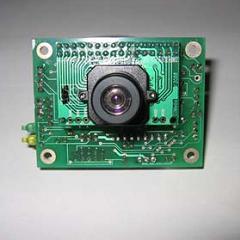
8-bit AVR + Camera Interface
Posted March 31, 2012 by Chris
“The AVRcam is a small, real-time image processing engine capable of tracking colorful objects. The system was specifically designed to provide hobbyists with a vision system that can be easily added to their projects (robot, security, monitoring, etc).”

Microcontroller Circuit With Copper Tape
Posted March 16, 2012 by Chris
“Making a circuit with a microcontroller, battery, and LEDs connected by copper tape.” No secrets here, just a very unique way to use hot glue and copper tape to build your own circuit board on a piece of wood for the world to see.
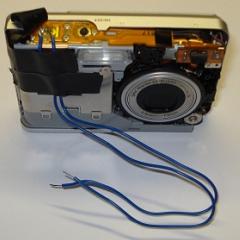
DIY Time Lapse Digital Camera
Posted March 10, 2012 by Chris
“Turn an old digital camera into a time lapse camera using an arduino, a relay, and an open source software program called makeAVI (windows). To modify the camera I disassembled the camera cover and removed the button that activates the shutter.”
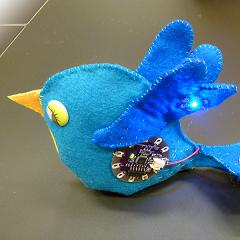
Plushbot Project – Interactive DIY Valentines
Posted March 4, 2012 by Chris
“The Plushbot name illustrates the devices’ hybrid nature, which combines robotic parts like Arduino microcontrollers, conductive thread, a battery and various sensors with plush materials like stuffing and felt. The result: soft Plushbot toys that can be programmed to play music, change color (via LED lights) and move.”

TinyPOV – Yet Another AVR POV Project
Posted February 28, 2012 by Chris
“This microcontroller project is another version of a persistence of vision or POV toy. It has 8 LEDs and it is powered by ATtiny2313 (AVR microcontroller by Atmel) operating at 2 x AA batteries. This is a tiny toy and it can be carried easily inside your pockets.”

Nikon Camera Intervalometer
Posted February 26, 2012 by Chris
“An intervalometer is a device that sends out a signal at regular intervals. When hooked up to a camera, they can be used to take time lapse images, bracket exposure lengths and precisely time long exposure images (over 30 seconds) that the built-in timer on the camera cannot normally generate. When hooked up to a flash, they can be used to create a strobe effect. Being this useful, there are many different DIY projects to make them.”
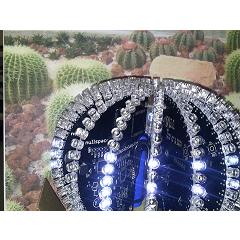
An AVR LED Blinky Ball
Posted February 22, 2012 by Chris
“Description: This spectaculously amazorbing ball that will mesmerise all who look at it, caturday will no longer be the same ! The Specs: There are 384 LEDs all individually controllable and programmable, it is compatible with the freely available Arduino IDE and AVR Studio, comes with sample source code and patterns to get you started, as well as being preprogrammed for instant blinky fun.”

SoftVGA – AVR VGA Display Generator
Posted February 15, 2012 by Chris
“This project is aimed at generating an VGA monitor (basic 31.5kHz horizontal, 70Hz/400line or 60Hz/480line vertical) compatible video signal, without using an specialised hardware VLSI video generator chip (hardwired limited, not available any more), nor 100s of TTL chips. All is done in software, running as vertical “microcode” on an single Atmel AVR microcontroller chip: an ATmega32, 16MHz, 32k Flash, 2k SRAM, 40pin, 32IOs.”
Currently Hot

Programming the eBOX
create & download an os image to the eBOX-II

The Altera DE2 Board
a simple introduction for setting up the DE2 board
The eBOX-II Embedded PC
learn the in's and out's of the eBOX-II

Stepper Motor Control
control a stepper motor using an LMD18245

PIC Prototyping Basics
build your own pic prototype development board
Animatronics

Recent Articles

Arduino DDS Shield
build your own arduino based analog signal generator

A Digital Multimeter In Review (Tenma 72-7735)
learn about your typical digital multimeter in review

The PIC Annoy PCB
build something to annoy your co-workers

Automate Your Life With Cron
learn how to use cron for computer automation

Web Scraping For Weather Updates
learn how to use php to scrape the web

Creating A Web Server In Linux
learn how to make a lamp web server in linux

Stepper Motor Control With A stepRocker TMCM-1110
learn how a commercial stepper motor controller works

Arduino To PIC Wireless Proximity Motor Control
control a motor with a distance sensor wirelessly

PIC to Arduino Wireless Communication via XBee
use xbee to make a pic wirelessly talk to an arduino

Motor Control via Infrared Distance Sensor
control a motor simply by waving your hand

