



Get started learning to build your own electronics by following our FREE online courses below!
Learn More »
Categories
- animatronics (12)
- apple (11)
- arduino (179)
- art (41)
- articles (121)
- artificial intelligence (11)
- automation (421)
- avr (205)
- bitcoin (3)
- breadboard (9)
- cameras (57)
- cars (26)
- cell phones (28)
- clothing mods (21)
- console mods (26)
- dangerous (94)
- desktop mods (24)
- embedded (5)
- flying things (54)
- fpga (22)
- gaming creations (108)
- interface (225)
- internet (17)
- laptop mods (6)
- lasers (22)
- linux (7)
- magnetic (3)
- medical (12)
- microcontrollers (51)
- misc projects (152)
- msp (12)
- music (124)
- pic (90)
- projects (23)
- pyroedu (76)
- raspberry pi (26)
- robots (312)
- security (36)
- sensors (307)
- software (200)
- solar (19)
- stamp (9)
- tools (149)
- tutorials (98)
- Uncategorized (45)
- usb (44)
- wireless (256)
Sponsors
Build Like A Pyro!
Find many of the parts used on this site at our favorite online electronics shop


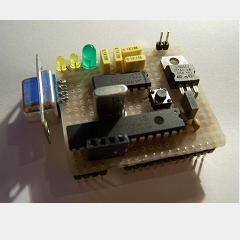
DIY dsPIC breadboard
Posted December 9, 2011 by Chris
“This thing may remind you of an Arduino but it’s not, it’s not even an AVR but a dsPIC30F2012. Lots of times I want to try out something, but I’m too lazy to make the whole thing over and over on a breadboard so why not solder it together quick on a pref board so I can just stick it in.”


DE0 Nano VGA via FPGA Reborn
Posted December 8, 2011 by Chris
This article will look at how to build the same functionality that the Masochist’s Video Card (built only with 7400 logic IC’s) had, however this time we will use the DE0 Nano development board to complete the task, instead of wrist-breaking, pain-staking, masochist-loving wire-wrapping.

Magic 8 Thing
Posted December 7, 2011 by Chris
“For those who don’t know what a Magic 8 Thing is, it is a Magic 8 Ball, made with an ATMega328, an LCD, a surplus mercury tilt switch from a retired thermostat and some code. I call it a ‘Thing’ instead of a ‘Ball’ because my version is both non-spherical and bears no functional resemblance to an actual ‘Magic 8 Ball’.”
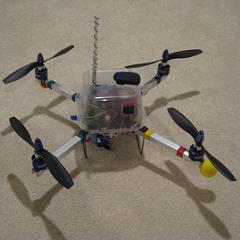
ARM Based Quadcopter
Posted December 6, 2011 by Chris
“The electronics setup consists of an ETT STM32 stamp module which runs custom flight software written in C. The board contains an ARM Cortex M3 microcontroller with 64K of RAM and 512K of flash rom. The board itself runs at 3.3V, but the inputs are 5V tolerant.”

Wall-Climbing Ceiling-Walking Robot
Posted December 5, 2011 by Chris
“The goal of this project is to construct a digital controller for a w all climbing micro-robot. There are two kind of wall-climbing micro-robots in the lab. One is called ‘Flipper’, the other is called ‘Crawler’. The restrictions such as small size, light weight and low power consumption must be complied when designing the miniature robot.”
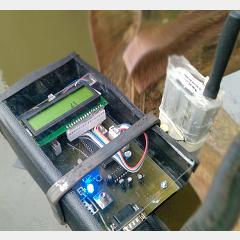
Wireless Water Level Monitoring System
Posted December 3, 2011 by Chris
“The main purpose is to gather water level data, store it in central database and view it on a web interface. This system can greatly reduce the effect of sudden water level increases due to rain, causing floods. Also, it minimizes the man power requirement to measure water levels in the reservoirs in distant areas.”

DIY Arduino Water Meter
Posted December 2, 2011 by Chris
“At the heart of the exploration was a need to cheaply measure water from the tap. Water meters vary quite drastically in price. We settled on a $20 water meter used for PC cooling systems (the INS-FM17N by Koolance) due to its accuracy, low price, small size, and electronic sensing method that could be easily measured by a microcontroller (such as an Arduino).”

TYMC: Album Artwork
Posted December 1, 2011 by Syd
“In this article we are going to use the Last.fm web service to grab the last piece of data we need to make our music collection perfect: the album artwork. We’re going to use the same techniques we’ve used in the past articles to expand the functionality of our application to do something new. With the concepts we employed in the previous articles, the possibilities are nearly limitless.”

Starfox FPGA Implementation
Posted November 30, 2011 by Chris
“Our project was an attempt to implement Starfox from the Super Nintendo Entertainment System (SNES) on the FPGA using the VGA running in 320 pixels by 240 pixels screen resolution. The source of the project idea is from the classic game Starfox on the SNES. This was one of the first games to display 3D models.”
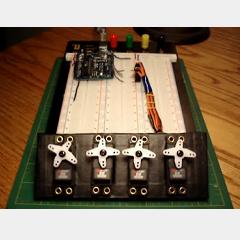
Arduino + Python 4-Axis Servo Control
Posted November 29, 2011 by Chris
“This tutorial will describe how to use Arduino to control a bank of four independent RC servos with your PC (or Mac, or *nix Box), using a USB cable and a modular Arduino-Python software stack.”
Currently Hot

The PIC Annoy PCB
build something to annoy your co-workers

Automate Your Life With Cron
learn how to use cron for computer automation

Web Scraping For Weather Updates
learn how to use php to scrape the web

Creating A Web Server In Linux
learn how to make a lamp web server in linux

Stepper Motor Control With A stepRocker TMCM-1110
learn how a commercial stepper motor controller works
Animatronics

Recent Articles

Arduino DDS Shield
build your own arduino based analog signal generator

A Digital Multimeter In Review (Tenma 72-7735)
learn about your typical digital multimeter in review
The PIC Annoy PCB
build something to annoy your co-workers
Automate Your Life With Cron
learn how to use cron for computer automation
Web Scraping For Weather Updates
learn how to use php to scrape the web
Creating A Web Server In Linux
learn how to make a lamp web server in linux
Stepper Motor Control With A stepRocker TMCM-1110
learn how a commercial stepper motor controller works

Arduino To PIC Wireless Proximity Motor Control
control a motor with a distance sensor wirelessly

PIC to Arduino Wireless Communication via XBee
use xbee to make a pic wirelessly talk to an arduino

Motor Control via Infrared Distance Sensor
control a motor simply by waving your hand

