



Get started learning to build your own electronics by following our FREE online courses below!
Learn More »
Categories
- animatronics (12)
- apple (11)
- arduino (179)
- art (41)
- articles (121)
- artificial intelligence (11)
- automation (421)
- avr (205)
- bitcoin (3)
- breadboard (9)
- cameras (57)
- cars (26)
- cell phones (28)
- clothing mods (21)
- console mods (26)
- dangerous (94)
- desktop mods (24)
- embedded (5)
- flying things (54)
- fpga (22)
- gaming creations (108)
- interface (225)
- internet (17)
- laptop mods (6)
- lasers (22)
- linux (7)
- magnetic (3)
- medical (12)
- microcontrollers (51)
- misc projects (152)
- msp (12)
- music (124)
- pic (90)
- projects (23)
- pyroedu (76)
- raspberry pi (26)
- robots (312)
- security (36)
- sensors (307)
- software (200)
- solar (19)
- stamp (9)
- tools (149)
- tutorials (98)
- Uncategorized (45)
- usb (44)
- wireless (256)
Sponsors
Build Like A Pyro!
Find many of the parts used on this site at our favorite online electronics shop


PIC As SPI Master And Slave
Posted September 1, 2011 by Chris
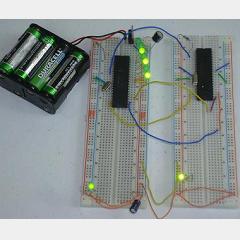
SPI is one of the more prevalent serial communication interfaces for low speed devices like sensors, motor controllers and even LCDs. This tutorial shows you how build an SPI master using a PIC, and interface it to an SPI slave, also a PIC. The final system, is a simple Master-Slave relationship with LED flashing proof.


Braille Keyboard – BrailleDuino
Posted August 9, 2011 by Chris
Braille has been the standard medium for blind people for a very long time, however with the advent of computers, the human-computer interface becomes trickier. The BrailleDuino attempts to bridge the gap by creating an interface that lets you type in braille ‘code’ instead of letters.
Wireless Communication Over IR
Posted July 28, 2011 by Chris
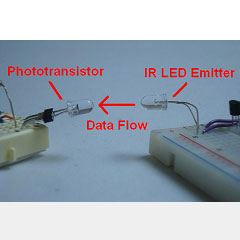
Wireless infrared systems are unique because of their ease in design and low cost. This week’s PyroElectro tutorial builds a system to transmit 9600 baud serial data from a PIC over IR to a receiving PIC. The wireless infrared link acts as if the Tx and Rx pins on the two PICs were connected with a wire. If you’re looking to make your own wireless system, don’t miss this article!
USB 8bit Interface Board
Posted July 27, 2011 by Chris
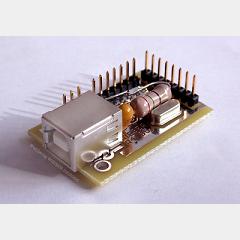
The FTDI USB to Serial converter chip has grown quite a bit in popularity recently for its ease of use in windows and linux. This article shows you how to use the FT245 to create a USB input/output interface with an 8 pin header off of a PCB and 4 control lines.
Making Your Own PCI Interface [DIY]
Posted June 29, 2011 by Chris
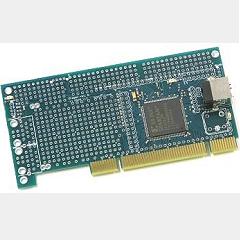
The PCI bus architecture has existed for a long time and as antiquated as the design is, it still works very well and exists in most modern consumer computers. But, haven’t you ever wanted to make your own PCI card? This article goes step-by-step through the process of building a PCI Interface using a Xilinx FPGA to do the heavy lifting. Verilog source code and hardware schematics are included with the article.
Currently Hot

Build A CPLD Dev Board
make your own cpld development board

Build A ByteBlaster
build a cable so you can program your fpga/cpld

Interfacing A PIC To LCD (16×2)
control an lcd display with a pic

Short Range Personal Radar
a complete radar system using the ir range sensor

The IR Range Sensor
learn the basics of the sharp ir range sensor
Animatronics

Recent Articles

Arduino DDS Shield
build your own arduino based analog signal generator

A Digital Multimeter In Review (Tenma 72-7735)
learn about your typical digital multimeter in review

The PIC Annoy PCB
build something to annoy your co-workers

Automate Your Life With Cron
learn how to use cron for computer automation

Web Scraping For Weather Updates
learn how to use php to scrape the web

Creating A Web Server In Linux
learn how to make a lamp web server in linux

Stepper Motor Control With A stepRocker TMCM-1110
learn how a commercial stepper motor controller works

Arduino To PIC Wireless Proximity Motor Control
control a motor with a distance sensor wirelessly

PIC to Arduino Wireless Communication via XBee
use xbee to make a pic wirelessly talk to an arduino

Motor Control via Infrared Distance Sensor
control a motor simply by waving your hand

