



Get started learning to build your own electronics by following our FREE online courses below!
Learn More »
Categories
- animatronics (12)
- apple (11)
- arduino (179)
- art (41)
- articles (121)
- artificial intelligence (11)
- automation (421)
- avr (205)
- bitcoin (3)
- breadboard (9)
- cameras (57)
- cars (26)
- cell phones (28)
- clothing mods (21)
- console mods (26)
- dangerous (94)
- desktop mods (24)
- embedded (5)
- flying things (54)
- fpga (22)
- gaming creations (108)
- interface (225)
- internet (17)
- laptop mods (6)
- lasers (22)
- linux (7)
- magnetic (3)
- medical (12)
- microcontrollers (51)
- misc projects (152)
- msp (12)
- music (124)
- pic (90)
- projects (23)
- pyroedu (76)
- raspberry pi (26)
- robots (312)
- security (36)
- sensors (307)
- software (200)
- solar (19)
- stamp (9)
- tools (149)
- tutorials (98)
- Uncategorized (45)
- usb (44)
- wireless (256)
Sponsors
Build Like A Pyro!
Find many of the parts used on this site at our favorite online electronics shop


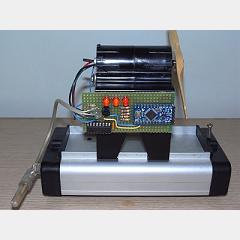
Arduino-Controlled Physics Lab Fan-Cart
Posted September 27, 2011 by Chris
A “fan cart” is a roughly constant-force device used in introductory physics labs. It consists of a fan (usually a model airplane propeller on a brushed DC motor) mounted on top of a low-friction cart. This article gives a quick overview of the design and includes the software used to make the system work. Take a look!
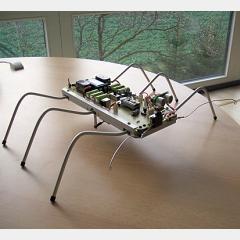
DIY Robot Spider (Eigenbau einer Roboterspinne)
Posted September 26, 2011 by Chris
This little spider (only 6 legs!) uses some sensors and a Stamp (or PIC) to navigate its way about the world. The article describes how it was built and the custom software that accompanies the project. Also, the article is in german so if you’re not a Deutscher/Österreicher/Schweizer be sure to google translate it.
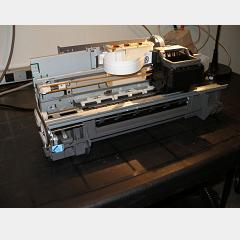
An Inkjet Printer Servo System
Posted September 19, 2011 by Chris
A DC servo motor is a powerful tool if you know how to design it properly. They offer high torque and high precision, something that steppers can’t always offer. This article dis-assembles a standard inkjet printer to show you how to experiment with building a low cost DIY servo system. They even recommend using my 10-A H-Bridge! The article is a two parter, so don’t miss both pages.

16 Bit FPGA Calculator
Posted September 8, 2011 by Chris
One of the primary building blocks of a processor is called the ALU (arithmetic logic unit). It allows for quick and easy arithmetic, sometimes in line with DSP. This project gives a quick introduction for how to make an ALU for a calculator using the Altera UP2 platform.
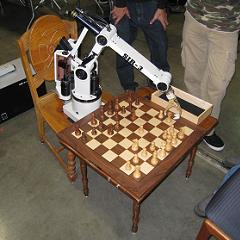
Computer Controlled – Chess Playing Robot
Posted September 7, 2011 by Chris
A Chess Playing Robot? Hell yeah! In a great display of what one engineer can do with some spare time, here is an automated system that will play chess against you and probably even beat you. This type of robot bridges the gap between playing against a computer on your monitor and actually moving chess piece on a board in real life. See the website for documentation and source code.
PWM Motor Control via FPGA
Posted September 6, 2011 by Chris
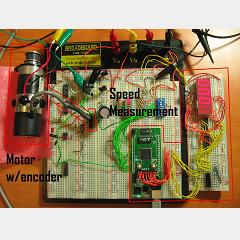
PWM signals are used all over the place, and for motor control they are a must. Varying the PWM signal will control speed and direction through most motor controllers. This white paper describes one way of making PWM signals with a Xilinx FPGA and also incorporating feedback control from the motor in the FPGA.

Nifty Car Security system: Version 2
Posted September 5, 2011 by Chris
Here’s an article that details out how to access the power system of your car and use it for your own in-car electronics modifications. This project specifically talks about building a DIY security system using a PIC microcontroller and some additional circuitry.

A PIC-Based Dollhouse Elevator and Lights
Posted September 4, 2011 by Chris
If you’re an overly obsessive father, this project might be up your alley and making your daughter’s doll house automated might be one step away from trying it on your real house, so why not give it a shot? This article explains how one man mod’d his daughter’s doll house with some automation using a PIC.
Pill Reminder
Posted August 22, 2011 by Chris
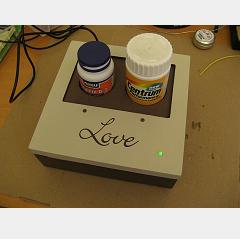
This article demonstrates another way to add some automation to our lives through a device that reminds you when you need to take your medicine. The intelligent part of this project is powered by an arduino / prototino and the rest done through timing and output to an LED that lets you know when the time is up.

CNC Panel Cutter
Posted August 20, 2011 by Chris
Here’s a CNC panel cutter that uses the NXP mbed platform to give you control to move a drill on x, y and z axis. The platform allows for manual or automatic scripted control of the drill and display output on two 16×2 LCDs. The project documentation is comprehensive as this is a design entry for an NXP contest.
Currently Hot

Arduino LED Flashing Introduction
begin your journey learning about the arduino here

Wireless XBee Motor Control
wireless dual dc motor control via xbee

DIY Mini PIC Development Board
build your own quick, easy and awesome pic dev board

Wireless XBee Pan/Tilt With Servos
build a wireless pan/tilt system for your camera

PIC Prototyping: MPLABX + PICKIT3 Intro
learn how to use mplabx with the new pickit3
Animatronics

Recent Articles

Arduino DDS Shield
build your own arduino based analog signal generator

A Digital Multimeter In Review (Tenma 72-7735)
learn about your typical digital multimeter in review

The PIC Annoy PCB
build something to annoy your co-workers

Automate Your Life With Cron
learn how to use cron for computer automation

Web Scraping For Weather Updates
learn how to use php to scrape the web

Creating A Web Server In Linux
learn how to make a lamp web server in linux

Stepper Motor Control With A stepRocker TMCM-1110
learn how a commercial stepper motor controller works

Arduino To PIC Wireless Proximity Motor Control
control a motor with a distance sensor wirelessly

PIC to Arduino Wireless Communication via XBee
use xbee to make a pic wirelessly talk to an arduino

Motor Control via Infrared Distance Sensor
control a motor simply by waving your hand

