



Get started learning to build your own electronics by following our FREE online courses below!
Learn More »
Categories
- animatronics (12)
- apple (11)
- arduino (179)
- art (41)
- articles (121)
- artificial intelligence (11)
- automation (421)
- avr (205)
- bitcoin (3)
- breadboard (9)
- cameras (57)
- cars (26)
- cell phones (28)
- clothing mods (21)
- console mods (26)
- dangerous (94)
- desktop mods (24)
- embedded (5)
- flying things (54)
- fpga (22)
- gaming creations (108)
- interface (225)
- internet (17)
- laptop mods (6)
- lasers (22)
- linux (7)
- magnetic (3)
- medical (12)
- microcontrollers (51)
- misc projects (152)
- msp (12)
- music (124)
- pic (90)
- projects (23)
- pyroedu (76)
- raspberry pi (26)
- robots (312)
- security (36)
- sensors (307)
- software (200)
- solar (19)
- stamp (9)
- tools (149)
- tutorials (98)
- Uncategorized (45)
- usb (44)
- wireless (256)
Sponsors
Build Like A Pyro!
Find many of the parts used on this site at our favorite online electronics shop


Arduino DVM with LCD Display
Posted January 8, 2012 by Chris
“A Digital Voltmeter (DVM) is one of the first things you need if you’re building electronics projects. Most of us have one. But what if you need more than one? Enter the Arduino. If you have an Arduino that can drive an LCD, you’ve got a multi-channel voltmeter!”

Pan Tracking Webcam Using OpenCV and Arduino
Posted January 7, 2012 by Chris
“The protocol is very simple between OpenCV and Arduino: the program transmits one integer per line through the serial connection (using the USB connection or a RS232 port). Each integers gives the position (in microseconds) to where the servo should move.”

Verilog Based Parallel Port FPGA Interface
Posted January 6, 2012 by Chris
“The main goals of this project was to learn Verilog, to learn about buses and to create a platform for future projects which require the parallelism and/or exact timing of an FPGA combined with the ease of programming of a general purpose PC. An example of a future project is a programmable function generator. At the command of an application running on the PC, the FPGA can generate square waves or PWM signals to feed into a device under test.”

Arduino-based GSM remote control
Posted January 5, 2012 by Chris
“Using an ATmega 2560 and therefore the heart of Arduino, we have developed a remote control with GSM. This allows to control 2IN/2OUT, DTMF key, gate control and GSM thermostat activated remotely. The control is simple to use, thanks to the availability of several libraries that allow you to do anything to the Arduino; if there is not really a specific library, you can modify an existing one.”
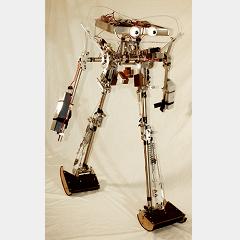
Research: Making Robots Walk Like Humans
Posted January 4, 2012 by Chris
“A simple Atmel microcontroller runs the high-level state machine that integrates simple sensor data and dictates behaviour of the motors and latches. Simple electrical relays (right side) act between the microcontroller and high-power electromechanical components.”

Bluetooth Media Remote
Posted January 3, 2012 by Chris
“The final Micro-controller I decided to use on the final product was a ATMEGA8. In the first post I used an ATMEGA8515. For several reasons I decided not to use this one in the final product. Firstly, it’s a 40 pin package. I do not need that many I/O lines. It draws more power. And finally, I need that one for my studies at uni. So an ATMEGA8 was used.”

Stabilization Aerial Camera Platform
Posted January 2, 2012 by Chris
“Photographers want total control of all aspects of a camera such as exposure, shutter speed and aperture size. However, some breathtaking pictures require the photographer to be separated from the camera, and thus there is a need for remote access and currently such commercial solutions are very limited.”

Interface RFID with 8051 microcontroller (AT89C51)
Posted January 1, 2012 by Chris
“An RFID reader is a device which is used to communicate with RFID tags by receiving and transmitting signals. These signals use radio waves for wireless communication. RFID tag is applied to products, individuals or animals to identify and track them. The identification is done through a unique serial number. This topic covers the interfacing of a passive RFID system with AT89C51.”
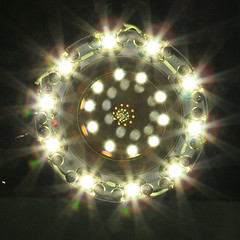

Cornell Univ: Proximity Security System
Posted December 30, 2011 by Chris
“For our final project, we designed and built an RFID-based proximity security system for use with Cornell Identification cards, which have been RFID-embedded since fall of 2003. The idea for this project was sort of spawned from our general interest in RFID technologies and the near-simultaneous occurance of Lab 2 and the antiquated lock system at our fraternity house breaking.”
Currently Hot

The PIC Annoy PCB
build something to annoy your co-workers

Automate Your Life With Cron
learn how to use cron for computer automation

Web Scraping For Weather Updates
learn how to use php to scrape the web

Creating A Web Server In Linux
learn how to make a lamp web server in linux

Stepper Motor Control With A stepRocker TMCM-1110
learn how a commercial stepper motor controller works
Animatronics

Recent Articles

Arduino DDS Shield
build your own arduino based analog signal generator

A Digital Multimeter In Review (Tenma 72-7735)
learn about your typical digital multimeter in review
The PIC Annoy PCB
build something to annoy your co-workers
Automate Your Life With Cron
learn how to use cron for computer automation
Web Scraping For Weather Updates
learn how to use php to scrape the web
Creating A Web Server In Linux
learn how to make a lamp web server in linux
Stepper Motor Control With A stepRocker TMCM-1110
learn how a commercial stepper motor controller works

Arduino To PIC Wireless Proximity Motor Control
control a motor with a distance sensor wirelessly

PIC to Arduino Wireless Communication via XBee
use xbee to make a pic wirelessly talk to an arduino

Motor Control via Infrared Distance Sensor
control a motor simply by waving your hand

