



Get started learning to build your own electronics by following our FREE online courses below!
Learn More »
Categories
- animatronics (12)
- apple (11)
- arduino (179)
- art (41)
- articles (121)
- artificial intelligence (11)
- automation (421)
- avr (205)
- bitcoin (3)
- breadboard (9)
- cameras (57)
- cars (26)
- cell phones (28)
- clothing mods (21)
- console mods (26)
- dangerous (94)
- desktop mods (24)
- embedded (5)
- flying things (54)
- fpga (22)
- gaming creations (108)
- interface (225)
- internet (17)
- laptop mods (6)
- lasers (22)
- linux (7)
- magnetic (3)
- medical (12)
- microcontrollers (51)
- misc projects (152)
- msp (12)
- music (124)
- pic (90)
- projects (23)
- pyroedu (76)
- raspberry pi (26)
- robots (312)
- security (36)
- sensors (307)
- software (200)
- solar (19)
- stamp (9)
- tools (149)
- tutorials (98)
- Uncategorized (45)
- usb (44)
- wireless (256)
Sponsors
Build Like A Pyro!
Find many of the parts used on this site at our favorite online electronics shop


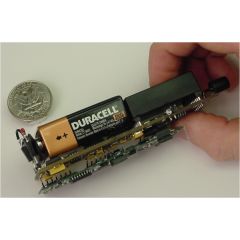
WHMS – Wearable Health Monitoring Systems
Posted July 20, 2015 by Chris
"Wearable health monitoring systems integrated into a telemedicine system are novel information technology that will be able to support early detection of abnormal conditions and prevention of its serious consequences. Many patients can benefit from continuous ambulatory monitoring as a part of a diagnostic procedure, optimal maintenance of a chronic condition or during supervised recovery from an acute event or surgical procedure."
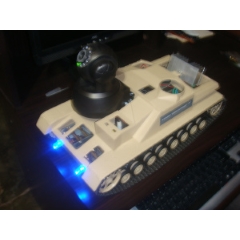
Remote Controlled Surveillance Mobile Robot with IP Cam
Posted July 14, 2015 by Chris
"The Senior Year Design Project was named Vanguard by the team. He is a remote controlled surveillance robot. To avoid data communication problems we decided to use different protocols for controlling the wireless camera and the robot. The robot can be controlled through desktop or laptop computers while the video can be controlled through internet, adhoc, WAN and LAN. It is powered by two batteries. One for the circuit and one for its motors."
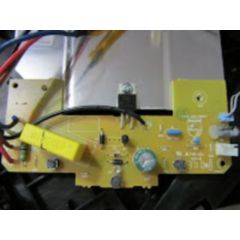
Building a new firmware for the Senseo coffee machine
Posted May 17, 2015 by Chris
"This part will describe all the hardware and various techniques used to figure out which signal goes where. Why do this? It’s an improvement on the original firmware and an exercise in consumer product design."
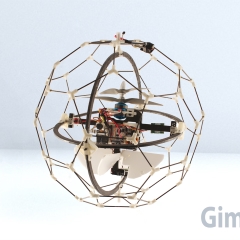
Robust Flight in Cluttered Indoor Environments (with GimBall)
Posted January 7, 2015 by Chris
"Robots capable of flight in cramped and cluttered environments have many advantages over their ground-based counterparts, but most current systems suffer from the same fundamental problem: any contact with obstacles have catastrophic, mission-ending results. What if instead of avoiding collisions, a flying robot became robust to them, and could even take advantage of contact with its environment?"
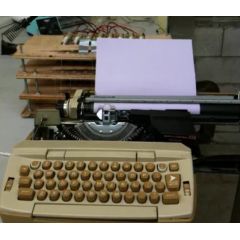
Automatypewriter
Posted January 5, 2015 by Chris
"The Automatypewriter is a typewriter that can type by itself. It can also detect what’s being typed on it. It can be used to send text to and/or receive text from a computer via USB. It was designed as a platform for playing interactive fiction games, in particular to play custom software being developed for it by Jim Munroe."
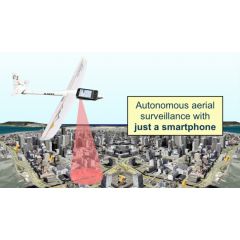
Flying Android Project
Posted January 3, 2015 by Chris
"In 2009, I was challenged by [govt agency] via GTRI to develop an Unmaned Aerial Vehicle (UAV) which is piloted by a smartphone. In particular, only the sensors on the phone may be used and the flight controller must run on the smartphone. Custom electronics were allowed to interface the phone to the airframe (PHY) but those electronics could sense or control."
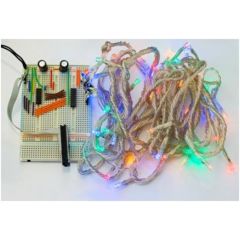
.NET Micro Framework For Driving Xmas LEDs
Posted December 25, 2014 by Chris
"The Micro Framework is one of the newest kids on the .NET block, but it does something really rather wonderful. It brings embedded development within the reach of any C# programmer. If you know C# and love Visual Studio, you can now get started building hardware and controlling it with your software. Moreover, it lets developers achieve one of their most cherished dreams, to control their festive lights using programs that they have written."
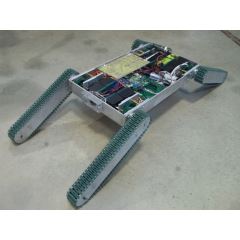
Team 8 – RESCUE
Posted November 6, 2014 by Chris
"The purpose of the prototype was to demonstrate the feasibility of a small, highly maneuverable search and rescue robot. As such, the completed prototype was successful. Capabilities include a ground speed of 10 inches per second, battery life of 50 minutes, wireless range of between 50 and 150 feet, weight of 14.5 pounds and the ability to climb stairs."
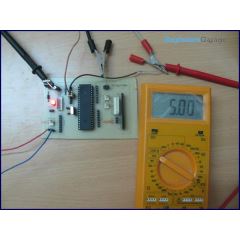
Waveform Generation using AVR Microcontroller
Posted September 26, 2014 by Chris
"At times we come across applications or situations wherein we need to generate square waves with the microcontroller. The square wave can be generated by programming a pin which toggles between 0 and 1 with a certain time delay. Alternatively, the inbuilt feature of AVR timers can be used in square wave generation."
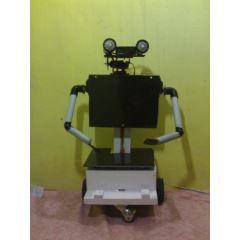
Chippu – A Robot to run ROS
Posted September 24, 2014 by Chris
"Lately I was busy in the hardware design of a personal robot named Chippu. It is an open source project and runs ROS, the same powerful code framework that runs on many robots like PR2. It is made as economical as possible. At present there is no on-board processing and it is done in a remote computer."
Currently Hot

Altera’s UP2 Board
learn about the up2 & create a 4-bit full adder

Build A CPLD Dev Board
make your own cpld development board

Build A ByteBlaster
build a cable so you can program your fpga/cpld

Interfacing A PIC To LCD (16×2)
control an lcd display with a pic

Short Range Personal Radar
a complete radar system using the ir range sensor
Animatronics

Recent Articles

Arduino DDS Shield
build your own arduino based analog signal generator

A Digital Multimeter In Review (Tenma 72-7735)
learn about your typical digital multimeter in review

The PIC Annoy PCB
build something to annoy your co-workers

Automate Your Life With Cron
learn how to use cron for computer automation

Web Scraping For Weather Updates
learn how to use php to scrape the web

Creating A Web Server In Linux
learn how to make a lamp web server in linux

Stepper Motor Control With A stepRocker TMCM-1110
learn how a commercial stepper motor controller works

Arduino To PIC Wireless Proximity Motor Control
control a motor with a distance sensor wirelessly

PIC to Arduino Wireless Communication via XBee
use xbee to make a pic wirelessly talk to an arduino

Motor Control via Infrared Distance Sensor
control a motor simply by waving your hand

