



Get started learning to build your own electronics by following our FREE online courses below!
Learn More »
Categories
- animatronics (12)
- apple (11)
- arduino (179)
- art (41)
- articles (121)
- artificial intelligence (11)
- automation (421)
- avr (205)
- bitcoin (3)
- breadboard (9)
- cameras (57)
- cars (26)
- cell phones (28)
- clothing mods (21)
- console mods (26)
- dangerous (94)
- desktop mods (24)
- embedded (5)
- flying things (54)
- fpga (22)
- gaming creations (108)
- interface (225)
- internet (17)
- laptop mods (6)
- lasers (22)
- linux (7)
- magnetic (3)
- medical (12)
- microcontrollers (51)
- misc projects (152)
- msp (12)
- music (124)
- pic (90)
- projects (23)
- pyroedu (76)
- raspberry pi (26)
- robots (312)
- security (36)
- sensors (307)
- software (200)
- solar (19)
- stamp (9)
- tools (149)
- tutorials (98)
- Uncategorized (45)
- usb (44)
- wireless (256)
Sponsors
Build Like A Pyro!
Find many of the parts used on this site at our favorite online electronics shop


TYMC: ID3 From Web
Posted November 17, 2011 by Chris
“Most mp3 files have at least some ID3 tags filled in. Most commonly, the Title and Artist are filled in. We’ll use these two bits of information to look up the rest of the information about the mp3 file (Track Number and Album).”
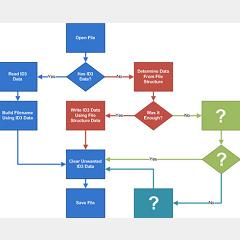
TYMC: Filename To ID3
Posted November 10, 2011 by Syd
“ The goal of this project will be to iterate over a list of files following our predefined file structure, parse each file’s file path to determine its ID3 tag data, and save each file with its updated ID3 data.” This is another great article dipping further into the software side of the world, showing you how to restructure your MP3 collection with Python!


HD44780-based LCDs with AVR’s
Posted November 5, 2011 by Chris
“On this page I will describe how to communicate with HD44780-based LCDs (Liquid Crystal Displays) using an Atmel AVR microcontroller. The page is mainly meant as a place for me to keep information on the pinouts of the display modules I have used, and to gather info about these displays, for me and others to use.”
TYMC: File Structure
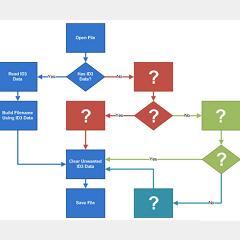
Posted November 3, 2011 by Syd
“This article will be the first in a series of software articles describing the process of organizing your music collection. I’ve decided to write the application in Python for a number of reasons: I’ve never used Python myself, Python has modules for reading and writing mp3 tags, and Python is easy to install and configure.”
Learning Serial Communication
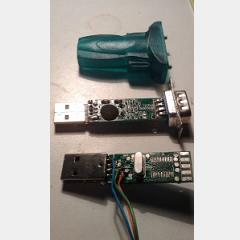
Posted October 29, 2011 by Chris
“This morning I decided its about time I learnt how to use the UART hardware in most PIC micro- controllers. I started off with a USB-RS-232 converter that I got for US$3 from DealExtreme.” A good look at how to hack a USB-to-Serial converter to mess around with a PIC’s UART module.

FPGA PDP-10 Clone
Posted October 28, 2011 by Chris
“The PDP-10/X is a re-build of the PDP-10, with 512KW of memory, a line-frequency clock, an interface to an RS-232 terminal, and an interface to an ATA-2 disk, that I designed and built just for fun.” The PDP-10 was a widely used mainframe computer way back in the day. Any re-make of the computer is purely for nostalgia for the few who remember what a legend it was.
PIC Win-32 based Logic Analyzer
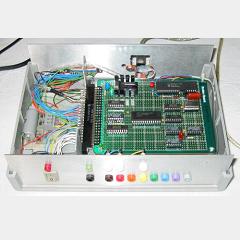
Posted October 12, 2011 by Chris
“The basic system uses a special FIFO chip (7204) which is dual-ported to store logic-state samples which are transferred into a PC and displayed using a Win-32 front-end.” If you’ve ever been curious about building your own logic analyzer, here’s a well documented open-source analyzer that will help get you started.
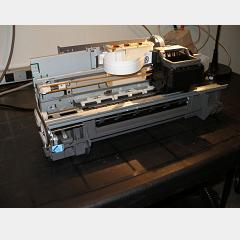
An Inkjet Printer Servo System
Posted September 19, 2011 by Chris
A DC servo motor is a powerful tool if you know how to design it properly. They offer high torque and high precision, something that steppers can’t always offer. This article dis-assembles a standard inkjet printer to show you how to experiment with building a low cost DIY servo system. They even recommend using my 10-A H-Bridge! The article is a two parter, so don’t miss both pages.

Programming the ATTiny85 – Arduino Style
Posted September 12, 2011 by Chris
Fans of the ATTiny now have another tool to add to their bag of tricks: an Arduino programmer! This article explains how to use an Arduino to program the ATTiny using the SPI communication protocol. The method is straight forward with no surprises so it could theoretically work with any microcontroller that has an SPI module built in.
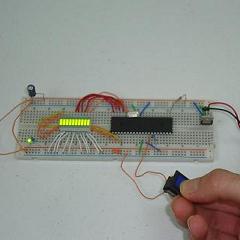
An Intro To Interrupts On A PIC
Posted September 9, 2011 by Chris
This Week’s PyroElectro tutorial takes a look at PIC interrupts vs. polling techniques for fast input/output systems. Polling for input usually means a lot more overhead and redundant code, so we turn to interrupts for event driven systems to minimize overhead. This tutorial uses a learn-by-example approach to show how interrupts work and how we use them.
Currently Hot

PIC Priority Interrupts
learn how to give your interrupts priority

An Intro To Interrupts On A PIC
an easy guide for learning about interrupts

PIC As SPI Master And Slave
learn how to use spi on a pic

Animatronic Neck [DIY]
build a neck for an animatronic head

Homemade Animatronic Mouth
learn how to make your robot speak
Animatronics

Recent Articles

Arduino DDS Shield
build your own arduino based analog signal generator

A Digital Multimeter In Review (Tenma 72-7735)
learn about your typical digital multimeter in review

The PIC Annoy PCB
build something to annoy your co-workers

Automate Your Life With Cron
learn how to use cron for computer automation

Web Scraping For Weather Updates
learn how to use php to scrape the web

Creating A Web Server In Linux
learn how to make a lamp web server in linux

Stepper Motor Control With A stepRocker TMCM-1110
learn how a commercial stepper motor controller works

Arduino To PIC Wireless Proximity Motor Control
control a motor with a distance sensor wirelessly

PIC to Arduino Wireless Communication via XBee
use xbee to make a pic wirelessly talk to an arduino

Motor Control via Infrared Distance Sensor
control a motor simply by waving your hand

