



Get started learning to build your own electronics by following our FREE online courses below!
Learn More »
Categories
- animatronics (12)
- apple (11)
- arduino (179)
- art (41)
- articles (121)
- artificial intelligence (11)
- automation (421)
- avr (205)
- bitcoin (3)
- breadboard (9)
- cameras (57)
- cars (26)
- cell phones (28)
- clothing mods (21)
- console mods (26)
- dangerous (94)
- desktop mods (24)
- embedded (5)
- flying things (54)
- fpga (22)
- gaming creations (108)
- interface (225)
- internet (17)
- laptop mods (6)
- lasers (22)
- linux (7)
- magnetic (3)
- medical (12)
- microcontrollers (51)
- misc projects (152)
- msp (12)
- music (124)
- pic (90)
- projects (23)
- pyroedu (76)
- raspberry pi (26)
- robots (312)
- security (36)
- sensors (307)
- software (200)
- solar (19)
- stamp (9)
- tools (149)
- tutorials (98)
- Uncategorized (45)
- usb (44)
- wireless (256)
Sponsors
Build Like A Pyro!
Find many of the parts used on this site at our favorite online electronics shop


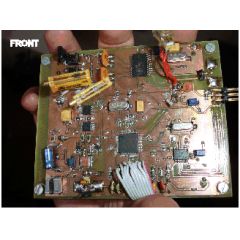
A Platform for RFID Security and Privacy Administration
Posted December 16, 2013 by Chris
"This paper presents the design, implementation, and evaluation of the RFID Guardian, the first-ever unified platform for RFID security and privacy administration. The RFID Guardian resembles an ‘RFID firewall,’ that monitors and controls access to RFID tags by combining a standard-issue RFID reader with unique RFID tag emulation capabilities."
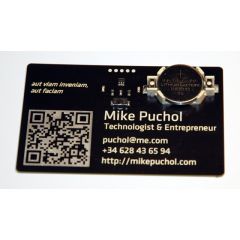
A PCB Business Card
Posted December 15, 2013 by Chris
"In essence, my new business/visit card would need to meet a set of basic requirements: Use a thin, one-side printed circuit board (PCB). Silver plating on black or blue mask. Show contact information – email, phone, URL, and so on. Include the simple LED driver circuit from the DEFCON badge, thus mixing hardware and software into the card. Be about as thin as a normal card. Include a personal motto. Be updatable from the web (uh?)."

Sound Activated Flash Trigger for High Speed Photography
Posted December 15, 2013 by Chris
"The circuit works great for dropping coins, marbles, fruits and the like into a glass of water, but the microphone pre-amplifier is just not sensitive enough to detect a single drop of water falling from a height, unless you hold the microphone really close. Am still working on a more sensitive version that should be able to do that."
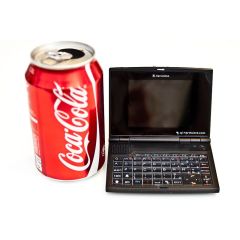
Ben NanoNote
Posted December 13, 2013 by Chris
"The Ben version of NanoNote is an ultra small form factor computing device. The device sports a 336 MHz processor, 2GB of flash memory, microSD slot, head phone jack, USB device and 850mAh Li-ion battery. It boots GNU/Linux out of the box and also boots over USB. It’s targeted squarely at developers who see the promise of open hardware and want to roll their own end user experience."
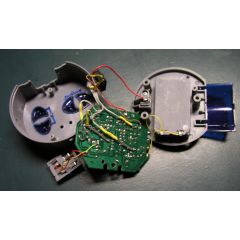
Computer Controlled RC Car
Posted December 12, 2013 by Chris
"I thought up the idea that it would be really cool to control a remote control car controlled by the parallel port. I did some research and Mike Beauchamp did just that and to top it off it’s controllable over the internet."
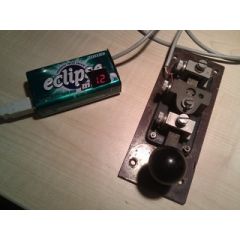
Morse Key USB keyboard
Posted December 11, 2013 by Chris
"That’s what the Morse Keyboard is all about. This little project I built plugs into a computer’s USB port and is seen by the computer as a standaard USB keyboard. As you tap out Morse, the device types each letter to your computer just like a standaard keyboard!"

Capacities: Life In The Emergent City
Posted December 10, 2013 by Chris
"’Capacities Life In The Emergent City’ captures the changes over time in the environment (city) and represents the changing life and complexity of space as an emergent artwork. Capacities goes beyond simple single user interaction to monitor and survey in real time the whole city and entirely represent the complexities of the real time city as a shifting morphing and complex system."
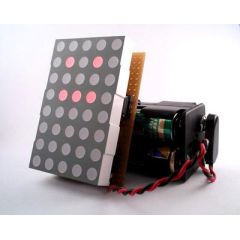
DIY Tengu on a Breadboard
Posted December 9, 2013 by Chris
"When I first saw Crispin Jones Tengu, I was sure, I must have one. If you don’t know tengu and don’t want to follow the link, it’s a small face, made of LEDs, that reacts to music and sound.
It did not take long until I decided to clone this funny little device. All it needs is a microcontroller, an LED matrix and a sound sensor."
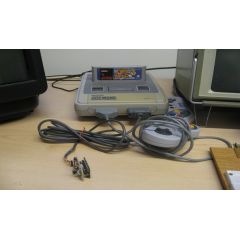
Human Movement Interface for Fighting Games
Posted December 8, 2013 by Chris
"The original idea was to create a new human interface for a commercial fighting game using two given technologies: Orients and Prospeckz. Orients are a set of sensors which output over the radio their coordinates in a 3 dimensional space plus other physical measurements such as acceleration. The sensors are attached to different parts of a human body, the output data is processed in real time, and models a human body and its movements."
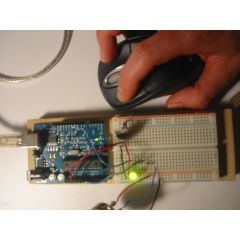
Serial Communication with Flash and Processing
Posted December 7, 2013 by Chris
"The concept of serial communication adds a whole other dimension to what you can do with the Arduino microcontroller. Communication with other applications is essential for the type of projects I would like to develop…My excitement in learning the technical aspects of serial communication encouraged me to experiment with with two dynamic programming environments that I enjoy working with: Flash and Processing."
Currently Hot

Build A PSP LCD Interface
learn how to display to a PSP LCD

DIY Stepper Motor Controller
reliable stepper motor control in a diy pcb

The Sharpie Dotifier
a robotic arm that draws everything

Line Following Mini Tank
a wooden tank that follows black lines

Homemade PCB (Etching)
build a pcb board with your bare hands
Animatronics

Recent Articles

Arduino DDS Shield
build your own arduino based analog signal generator

A Digital Multimeter In Review (Tenma 72-7735)
learn about your typical digital multimeter in review

The PIC Annoy PCB
build something to annoy your co-workers

Automate Your Life With Cron
learn how to use cron for computer automation

Web Scraping For Weather Updates
learn how to use php to scrape the web

Creating A Web Server In Linux
learn how to make a lamp web server in linux

Stepper Motor Control With A stepRocker TMCM-1110
learn how a commercial stepper motor controller works

Arduino To PIC Wireless Proximity Motor Control
control a motor with a distance sensor wirelessly

PIC to Arduino Wireless Communication via XBee
use xbee to make a pic wirelessly talk to an arduino

Motor Control via Infrared Distance Sensor
control a motor simply by waving your hand

