



Get started learning to build your own electronics by following our FREE online courses below!
Learn More »
Categories
- animatronics (12)
- apple (11)
- arduino (179)
- art (41)
- articles (121)
- artificial intelligence (11)
- automation (421)
- avr (205)
- bitcoin (3)
- breadboard (9)
- cameras (57)
- cars (26)
- cell phones (28)
- clothing mods (21)
- console mods (26)
- dangerous (94)
- desktop mods (24)
- embedded (5)
- flying things (54)
- fpga (22)
- gaming creations (108)
- interface (225)
- internet (17)
- laptop mods (6)
- lasers (22)
- linux (7)
- magnetic (3)
- medical (12)
- microcontrollers (51)
- misc projects (152)
- msp (12)
- music (124)
- pic (90)
- projects (23)
- pyroedu (76)
- raspberry pi (26)
- robots (312)
- security (36)
- sensors (307)
- software (200)
- solar (19)
- stamp (9)
- tools (149)
- tutorials (98)
- Uncategorized (45)
- usb (44)
- wireless (256)
Sponsors
Build Like A Pyro!
Find many of the parts used on this site at our favorite online electronics shop


Braille-O-Matic – mbed-operated Refreshable Braille Display
Posted August 15, 2014 by Chris
"The Braille-O-Matic is a device that allows the blind and visually impaired to read digital text by generating Braille characters at the pace at which Braille is read. It is a rotating system that simulates the natural act of reading Braille by having the dynamically generated Braille characters roll across the user’s fingertips."
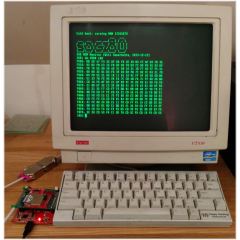
socz80: A Z80 retro Microcomputer Remade On A Spartan6 FPGA
Posted August 12, 2014 by Chris
"I built a small FPGA microcomputer for the Papilio Pro board. I’ve ported a few operating systems to run on it. These 8-bit machines have very minimal features but (somewhat unexpectedly) I found they can run a multi-user, multi-tasking UNIX operating system."
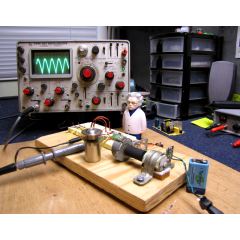
Stepper Motors As Generators
Posted August 9, 2014 by Chris
"Stepper motors are everywhere! They’re pretty easy to find in old abandoned printers. They come in a variety of configurations and number of poles but they all make great electrical generators! Any electric motor will also output a voltage when it’s freely spinning."
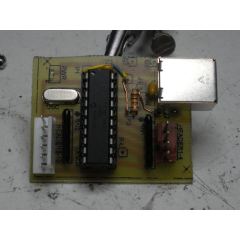
HID QuickKey USB Adapter
Posted August 8, 2014 by Chris
"The hardware is based on Microchip’s Low Pin Count USB Development Kit for the 1814K50. It is setup with 10 inputs, each with a pull-up resistor. The firmware is programmed with USB Human Interface Device Keyboard example from Microchip Solutions. It requires no drivers or special setup, it is plug and play."
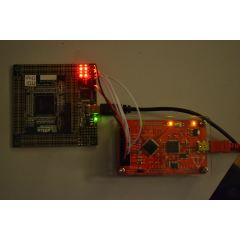
Using the DP Bus Blaster v3c to program Lattice CPLDs
Posted July 23, 2014 by Chris
"One day when playing with the CPLD board I accidentally shorted out two pins on the on-board FT2232 and – unfortunately – the magic smoke escaped! It was very clear that the FT2232 failed because it got very warm when plugging in the USB cable. Luckily the dev kit includes a 0.1″ header landing to connect an external JTAG probe. Wanting to get a Dangerous Prototypes Bus Blaster JTAG programmer anyway, this was the perfect excuse."
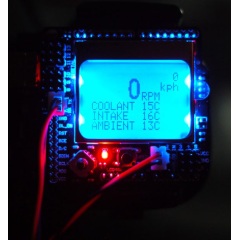
Beyond OBDII – Small, Dedicated, Onboard Computers
Posted July 13, 2014 by Chris
"This is beyond OBDII readers, but not exactly iOS and Android apps like Torque. This segment is defined as being a permanent or semi-permanent installation. I reserve the right to keep this definition a “moving target” so as to keep it differentiated from smartphone and tablet apps ;-)."
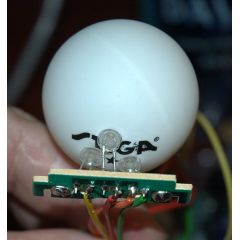
RGB LED Ping Pong Ball Light
Posted July 12, 2014 by Chris
"I did some more scrounging to create a mini Locnar using the LEDs from a Glade Light Show air freshener. The wall wart had previously been scrounged from this air freshener for the bread board power supply. Now we reuse part of the circuit board with the LEDs combined with what we learned in the Ping Pong Ball diffuser project to create a color changing orb."

2-sided Bicycle POV
Posted July 2, 2014 by Chris
"The MiniPOV uses only a single PIC16F630 while the spoke uses an Amtel micro-controller, an EEPROM, and several 74×259 8-bit latches. I wanted to enhance the MiniPOV to display text on both sides of the bike wheel. I chose to use Microchip’s PIC because they sold a cheap programmer.."

CPLD Programming: What is JTAG?
Posted June 29, 2014 by Chris
"Here we will discuss The ‘JTAG’ IEEE 1532 standard used for ‘ISP’ (In-System-Programming) I will also talk about Atmel’s ‘AVR ISP’ programmer and it’s ‘SPI’ (Serial-Peripheral-Interface)."

SD Card Interfacing with ATmega8
Posted June 8, 2014 by Chris
"Here is my project on interfacing of SD Card. microSD cards are available very cheap nowadays, a great option for having a huge memory in any embedded system project. It is compatible with SPI bus, so the interfacing is easy. SD card adapters are also easily available in market, one can easily make a bread-board adapter by soldering few pins on it."
Currently Hot

Homemade PCB (Etching)
build a pcb board with your bare hands

Simple Motor Optical Encoder
build a simple-low cost optical encoder

Intro To Digital Timers
learn about digital timers and the pic

Personal G-Force Meter
make your own personal g-force meter

VHDL Keyboard Input
use vhdl to interface a cpld to a keyboard
Animatronics

Recent Articles

Arduino DDS Shield
build your own arduino based analog signal generator

A Digital Multimeter In Review (Tenma 72-7735)
learn about your typical digital multimeter in review

The PIC Annoy PCB
build something to annoy your co-workers

Automate Your Life With Cron
learn how to use cron for computer automation

Web Scraping For Weather Updates
learn how to use php to scrape the web

Creating A Web Server In Linux
learn how to make a lamp web server in linux

Stepper Motor Control With A stepRocker TMCM-1110
learn how a commercial stepper motor controller works

Arduino To PIC Wireless Proximity Motor Control
control a motor with a distance sensor wirelessly

PIC to Arduino Wireless Communication via XBee
use xbee to make a pic wirelessly talk to an arduino

Motor Control via Infrared Distance Sensor
control a motor simply by waving your hand

