



Get started learning to build your own electronics by following our FREE online courses below!
Learn More »
Categories
- animatronics (12)
- apple (11)
- arduino (179)
- art (41)
- articles (121)
- artificial intelligence (11)
- automation (421)
- avr (205)
- bitcoin (3)
- breadboard (9)
- cameras (57)
- cars (26)
- cell phones (28)
- clothing mods (21)
- console mods (26)
- dangerous (94)
- desktop mods (24)
- embedded (5)
- flying things (54)
- fpga (22)
- gaming creations (108)
- interface (225)
- internet (17)
- laptop mods (6)
- lasers (22)
- linux (7)
- magnetic (3)
- medical (12)
- microcontrollers (51)
- misc projects (152)
- msp (12)
- music (124)
- pic (90)
- projects (23)
- pyroedu (76)
- raspberry pi (26)
- robots (312)
- security (36)
- sensors (307)
- software (200)
- solar (19)
- stamp (9)
- tools (149)
- tutorials (98)
- Uncategorized (45)
- usb (44)
- wireless (256)
Sponsors
Build Like A Pyro!
Find many of the parts used on this site at our favorite online electronics shop


ATMEL AVR on Linux
Posted October 17, 2008 by Chris
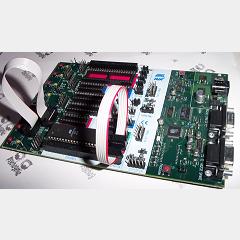
If you’re a linux guy and have always wanted an ‘in’ to the world of microcontrollers then this article/guide is for you. It’s not really a project so much as a very well written how-to develop for Atmel’s AVR using the linux gcc compiler. A great alternative from the Windowz world.

Homebrew Spectrum Analyzer
Posted October 15, 2008 by Chris
The spectrum analyzer is most useful for checking the range of frequencies from a given signal. This project is attempts to build a homebrew spectrum analyzer based off of various other designs from the internet. You’ll find many useful links in this project write-up.
PIC based Speed Trap
Posted October 7, 2008 by Chris
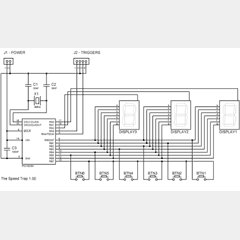
“This is a very affordable and simple to build speed trap based on the PIC 16C84 microcontroller. The goal was to use as few parts as possible while adding as many useful features as possible.” The project write-up has the software & hardware schematic available for download.
Wifi Robot
Posted October 3, 2008 by Chris
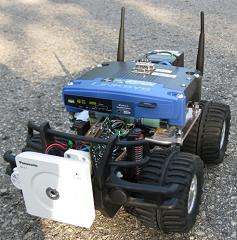
This robot is perhaps the most off-the shelf I’ve ever seen. It even has a wifi-router on top that is uses to receive commands. A lot of love was put into this one and the project write-up reflects that quite well. Take a look at this one, software/hardware info is all there.
Homemade Electric Gate
Posted October 1, 2008 by Chris
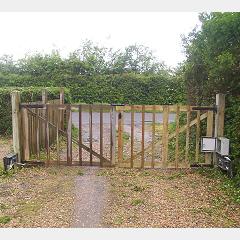
This project is the effort of a single DIYer who wanted to make his own transmitter/receiver pair to open a gate. This made it a lot easier for him to pull into his driveway. The project itself uses a lot of off-the-shelf components so it’d be easy to duplicate. The write-up is very straight forward and cuts to the chase.

DIY PIC Programmer
Posted September 21, 2008 by Chris
Most microcontroller programmers are actually very simple devices that can be made by yourself. Being that programmers range from $50+, so it can be a good investment or backup programmer. The parts are very cheap and this project write-up is clean with step-by-step instructions. Give it a look see!
Universal NiMH Charger
Posted September 19, 2008 by Chris
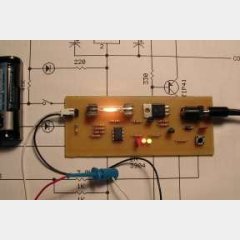
NiMH rechargeable batteries have been around for quite some time and have proven their worth. This type of rechargeable battery can be found inside things from electric cars to electric tooth-brushes. Today’s simple project makes use of a microcontroller for controlling the recharging of the battery and turning off when recharging has completed.

BEAM Snake
Posted September 13, 2008 by Chris
Snake robotics is a relatively new idea, however really cool. The implementation can be tricky but the overall design is actually not very mind-numbing. Each link in the snake acts as a single actuator (this project uses a servo) and helps to move the entire body of the snake. The project write-up has the purely analog electronic design and schematic.

Ruf Bot
Posted September 11, 2008 by Chris
This is a cool little robot with a very straight forward and simple design to be controlled remotely. It uses “off-the-shelf” circuitry and the project write-up has all the schematic and software info necessary for building your own. This project is light on the software, which makes it better for beginners, check this one out!
Cyber PCB Projects
Posted September 9, 2008 by Chris
Unfortunately for today’s project, there were too many projects & only in pdf format! Even so, there’s a link to the index with 10 really good projects & write-ups. They use various electronic components and you can learn a lot by attempting to reproduce the projects. Take a look, give it a shot!
Currently Hot

Build A ByteBlaster
build a cable so you can program your fpga/cpld

Interfacing A PIC To LCD (16×2)
control an lcd display with a pic

Short Range Personal Radar
a complete radar system using the ir range sensor

The IR Range Sensor
learn the basics of the sharp ir range sensor

Program the DE2 Board
download a simple program to the de2 board
Animatronics

Recent Articles

Arduino DDS Shield
build your own arduino based analog signal generator

A Digital Multimeter In Review (Tenma 72-7735)
learn about your typical digital multimeter in review

The PIC Annoy PCB
build something to annoy your co-workers

Automate Your Life With Cron
learn how to use cron for computer automation

Web Scraping For Weather Updates
learn how to use php to scrape the web

Creating A Web Server In Linux
learn how to make a lamp web server in linux

Stepper Motor Control With A stepRocker TMCM-1110
learn how a commercial stepper motor controller works

Arduino To PIC Wireless Proximity Motor Control
control a motor with a distance sensor wirelessly

PIC to Arduino Wireless Communication via XBee
use xbee to make a pic wirelessly talk to an arduino

Motor Control via Infrared Distance Sensor
control a motor simply by waving your hand

