



Get started learning to build your own electronics by following our FREE online courses below!
Learn More »
Categories
- animatronics (12)
- apple (11)
- arduino (179)
- art (41)
- articles (121)
- artificial intelligence (11)
- automation (421)
- avr (205)
- bitcoin (3)
- breadboard (9)
- cameras (57)
- cars (26)
- cell phones (28)
- clothing mods (21)
- console mods (26)
- dangerous (94)
- desktop mods (24)
- embedded (5)
- flying things (54)
- fpga (22)
- gaming creations (108)
- interface (225)
- internet (17)
- laptop mods (6)
- lasers (22)
- linux (7)
- magnetic (3)
- medical (12)
- microcontrollers (51)
- misc projects (152)
- msp (12)
- music (124)
- pic (90)
- projects (23)
- pyroedu (76)
- raspberry pi (26)
- robots (312)
- security (36)
- sensors (307)
- software (200)
- solar (19)
- stamp (9)
- tools (149)
- tutorials (98)
- Uncategorized (45)
- usb (44)
- wireless (256)
Sponsors
Build Like A Pyro!
Find many of the parts used on this site at our favorite online electronics shop


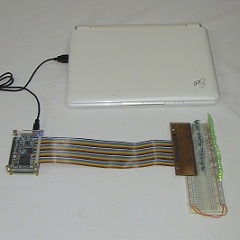
DE0-Nano FPGA Tilt Sensing
Posted August 16, 2012 by Chris
“This article will show you how an accelerometer works, how it can be used to detect tilt and also how we can display that tilt ‘value’ visually on a large array of LEDs on my DE0-Nano breakout board. This way whenever we need to see if something is level, we can use this simple but fun tool to know, although don’t count on multiple decimal precision here!


Wireless TAC-2 Controller
Posted August 15, 2012 by Chris
“I’ve had this one TAC-2 controller lying around with a broken cord and one day I just got an idea that maybe I’ll convert it to wireless version instead of fixing the cord so I could use it for controlling a robot or whatever comes in my mind. I ordered a set of modules for a 433 MHz RF link from SparkFun Electronics (transmitter and receiver) that are easy to use.”

Using A Light-Pipe As A Robotic Touch Sensor
Posted August 14, 2012 by Chris
“We’re all familiar with optical fibres. These are usually glass or plastic fibres that conduct light from one end to the other with relatively little loss. While these are typically solid, I wondered whether I could make a ‘fibre optic’ cable out of plastic tubing and water. No longer a fibre I suppose this would be better described as a light-pipe.”

Obstacle Avoider DIY Robot
Posted August 13, 2012 by Chris
“This robot is built using the chassis from our old DIY Robot Project, but we have replaced the sensors and the electronics to use more modern parts. We intend to develop this robot as far as possible so there will be many updates to this which will be added to the article.”
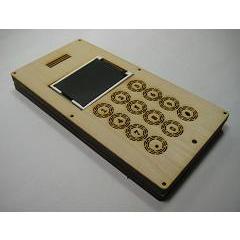
Laser Cut Wooden Cell Phone
Posted August 12, 2012 by Chris
“An exploration into the possibilities for individual construction and customization of the most ubiquitous of electronic devices, the cellphone. By creating and sharing open-source designs for the phone’s circuit board and case, we hope to encourage a proliferation of personalized and diverse mobile phones.”

IR Infrared Toy As A JTAG Programmer
Posted August 11, 2012 by Chris
“After seeing circuit details I discovered it used some pic18F2550 as was almost compatible with dangerousprotypes IR Infrared Toy, so I downloaded firmware and programmed succesfully this device easily without modifiying firmware source code.”

Polypods – Walking the Walk
Posted August 10, 2012 by Chris
“There are some tremendous hexapods and quadrupeds out there already but they do tend to be expensive. One to two thousand isn’t unreasonable for these beauties. My goal is to work the low end of the spectrum and come in under $200 for a quadruped.”
DE0-Nano FPGA Breakout Board
Posted August 9, 2012 by Chris
“This article will go step-by-step through the process of designing a PCB that breaks out the 40 pin expansion header on the DE0-Nano demo board. The PCB will easily connect to a breadboard where you have access to each individual I/O pin.”

Refreshment Replenishing Robot
Posted August 8, 2012 by Chris
“The main objective of this project was to design and create a robot capable of delivering a beverage to a specific location, when needed. To achieve this goal, two teams were combined and worked together into building an acquiring and delivering robot as well as a dispensing and replenishing station.”

DIY Vacuum Tube Prototyping Board
Posted August 7, 2012 by Chris
“This is a project that I made to take care of an ever increasing need to prototype vacuum tube (valve) circuits. As you can see from the photos, it really is a test “board”. I do a lot of work with tubes and love to design and improve circuits.”
Currently Hot

Web Scraping For Weather Updates
learn how to use php to scrape the web

Creating A Web Server In Linux
learn how to make a lamp web server in linux

Stepper Motor Control With A stepRocker TMCM-1110
learn how a commercial stepper motor controller works

Arduino To PIC Wireless Proximity Motor Control
control a motor with a distance sensor wirelessly

PIC to Arduino Wireless Communication via XBee
use xbee to make a pic wirelessly talk to an arduino
Animatronics

Recent Articles

Arduino DDS Shield
build your own arduino based analog signal generator

A Digital Multimeter In Review (Tenma 72-7735)
learn about your typical digital multimeter in review

The PIC Annoy PCB
build something to annoy your co-workers

Automate Your Life With Cron
learn how to use cron for computer automation
Web Scraping For Weather Updates
learn how to use php to scrape the web
Creating A Web Server In Linux
learn how to make a lamp web server in linux
Stepper Motor Control With A stepRocker TMCM-1110
learn how a commercial stepper motor controller works
Arduino To PIC Wireless Proximity Motor Control
control a motor with a distance sensor wirelessly
PIC to Arduino Wireless Communication via XBee
use xbee to make a pic wirelessly talk to an arduino

Motor Control via Infrared Distance Sensor
control a motor simply by waving your hand

